

Blog
Maine Coon vs Persian Cat

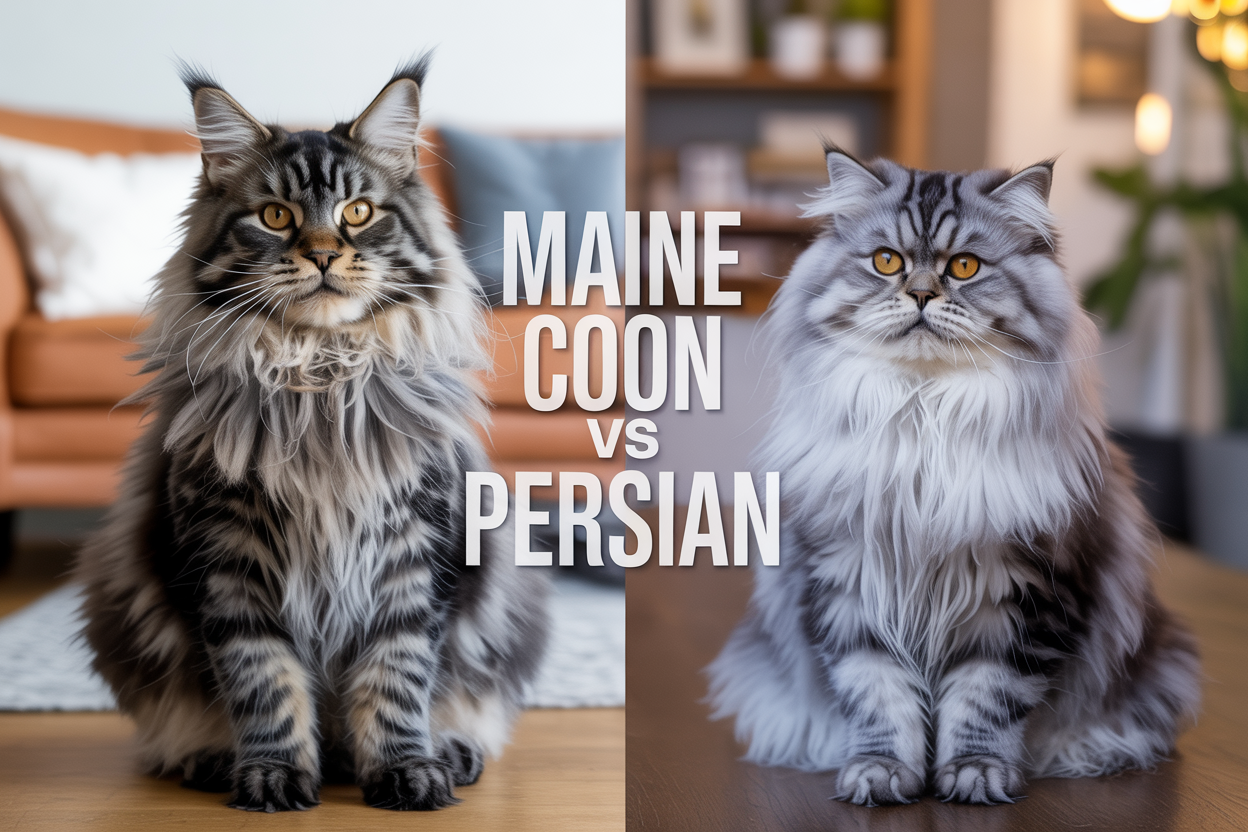
Maine Coon vs Persian Cat: Complete Breed Guide 2026
Choosing between a Maine Coon and Persian cat can feel overwhelming when both breeds offer such distinct personalities and care needs. This comprehensive guide is for potential cat owners, current pet parents considering a second cat, and anyone curious about these two beloved breeds.
The Maine Coon vs Persian cat size comparison reveals dramatic differences – Maine Coons are gentle giants weighing up to 25 pounds, while Persians typically max out around 12 pounds. Beyond size, these breeds differ significantly in Maine Coon vs Persian grooming needs, with Persians requiring daily brushing compared to Maine Coons’ weekly maintenance routine.
We’ll dive deep into Maine Coon vs Persian temperament differences to help you understand which personality fits your home better. You’ll also discover practical insights about Maine Coon vs Persian health issues, apartment living suitability, and daily care requirements. By the end, you’ll know exactly which breed matches your lifestyle, family situation, and long-term commitment level.
Maine Coon Breed Profile: The Gentle Giant
Physical Characteristics and Size Standards
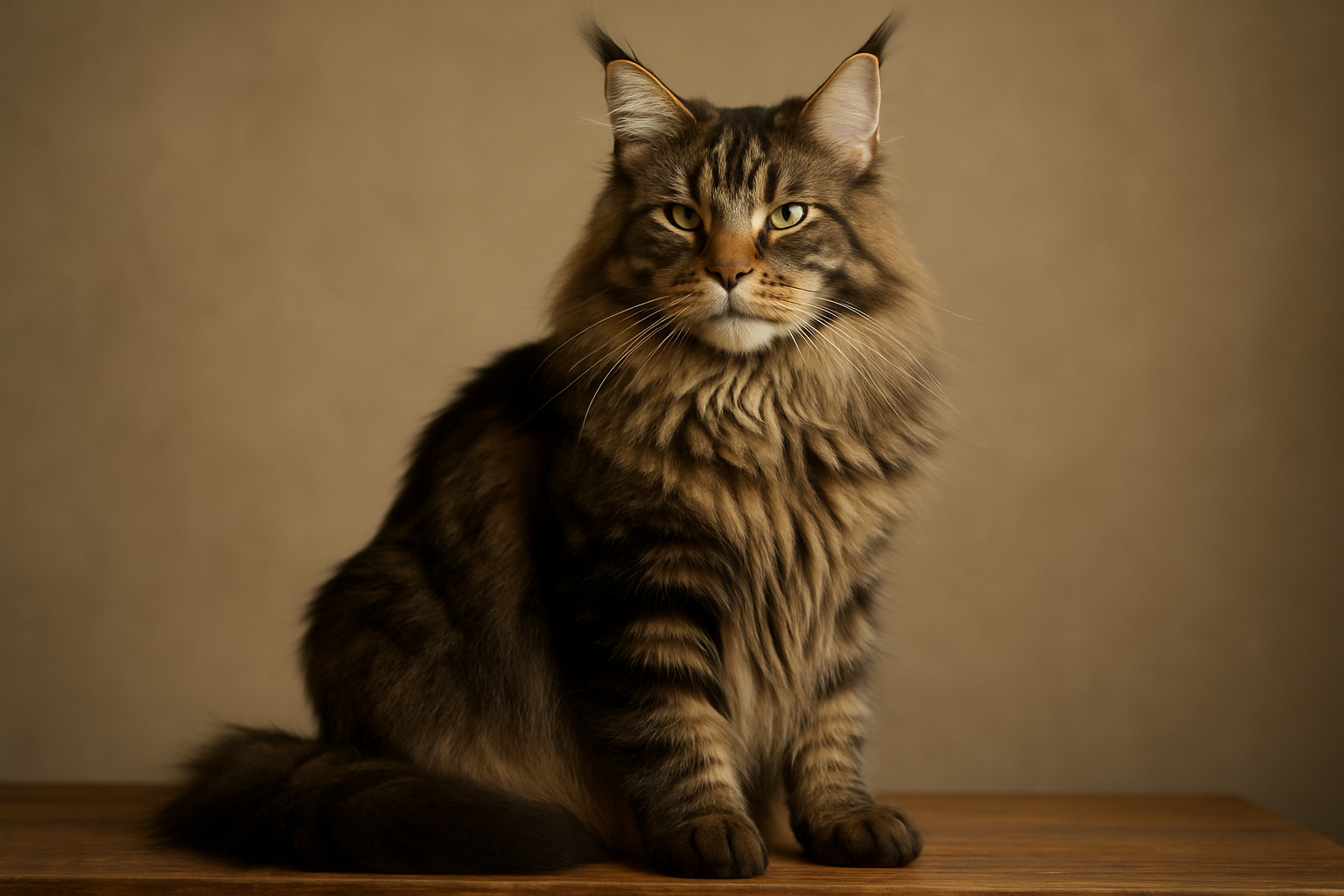
Maine Coon cats truly live up to their “gentle giant” reputation, ranking as one of the largest domestic cat breeds. Adult males typically weigh between 13-18 pounds, while females range from 8-12 pounds. Their impressive length can reach up to 40 inches from nose to tail tip, making them significantly larger than most house cats.
These magnificent cats feature a rectangular, muscular build with broad chests and sturdy bone structure. Their large, expressive eyes come in various colors including gold, green, and copper, often complementing their coat color. The breed’s distinctive lynx-like ear tufts and prominent cheekbones give them a wild, majestic appearance.
Maine Coons possess long, flowing tails that can measure up to 16 inches – nearly as long as their bodies. Their large, tufted paws act like natural snowshoes, a practical adaptation from their origins in harsh New England winters. The breed reaches full maturity slowly, taking 3-5 years to achieve their complete size and development.
Distinctive Coat Colors and Patterns
The Maine Coon’s semi-long, weather-resistant double coat comes in an astounding variety of colors and patterns. Over 75 different color combinations are recognized, including classic tabby patterns, solid colors, tortoiseshell, and calico variations.
Popular coat patterns include:
-
Classic Tabby: Bold, swirled patterns resembling marble
-
Mackerel Tabby: Narrow stripes running parallel down the sides
-
Silver Tabby: Striking contrast with white undercoat
-
Solid Colors: Black, white, blue, cream, and red variations
Their coat features longer guard hairs over a silky undercoat, with a distinctive ruff around the neck and longer fur on the back legs creating “pantaloons.” The coat naturally repels water and provides excellent insulation.
Temperament and Personality Traits
Maine Coons exhibit remarkably dog-like personalities, earning them the nickname “dog cats.” They’re known for following their owners around the house, greeting visitors at the door, and showing genuine interest in family activities. This breed demonstrates exceptional intelligence, often learning to open doors, fetch toys, and respond to their names consistently.
Their gentle, patient nature makes them excellent companions for families with children. Maine Coons rarely use their claws aggressively and prefer to communicate through soft chirps, trills, and musical meows rather than loud yowling. They’re naturally social cats that typically get along well with other pets, including dogs.
Despite their size, Maine Coons maintain playful kitten-like behavior well into adulthood. They enjoy interactive toys, puzzle feeders, and games that challenge their problem-solving abilities. Many owners report their Maine Coons enjoying water play, from drinking from faucets to occasionally joining them in the shower.
Lifespan and Health Considerations
Maine Coons generally enjoy robust health with an average lifespan of 12-15 years, though many live well into their late teens with proper care. However, like all purebred cats, they’re predisposed to certain genetic conditions that responsible breeders screen for.
Common health concerns include:
-
Hypertrophic Cardiomyopathy (HCM): The most serious inherited heart condition
-
Hip Dysplasia: Joint malformation that can affect mobility
-
Spinal Muscular Atrophy: A genetic neurological condition
-
Polycystic Kidney Disease: Inherited kidney condition
Regular veterinary checkups, genetic testing, and maintaining a healthy weight significantly contribute to longevity. Their large size makes them more prone to joint issues as they age, making quality nutrition and appropriate exercise routines essential for maintaining their health throughout their lives.
Persian Cat Breed Profile: The Luxurious Companion
Signature Flat-Face Features and Body Structure
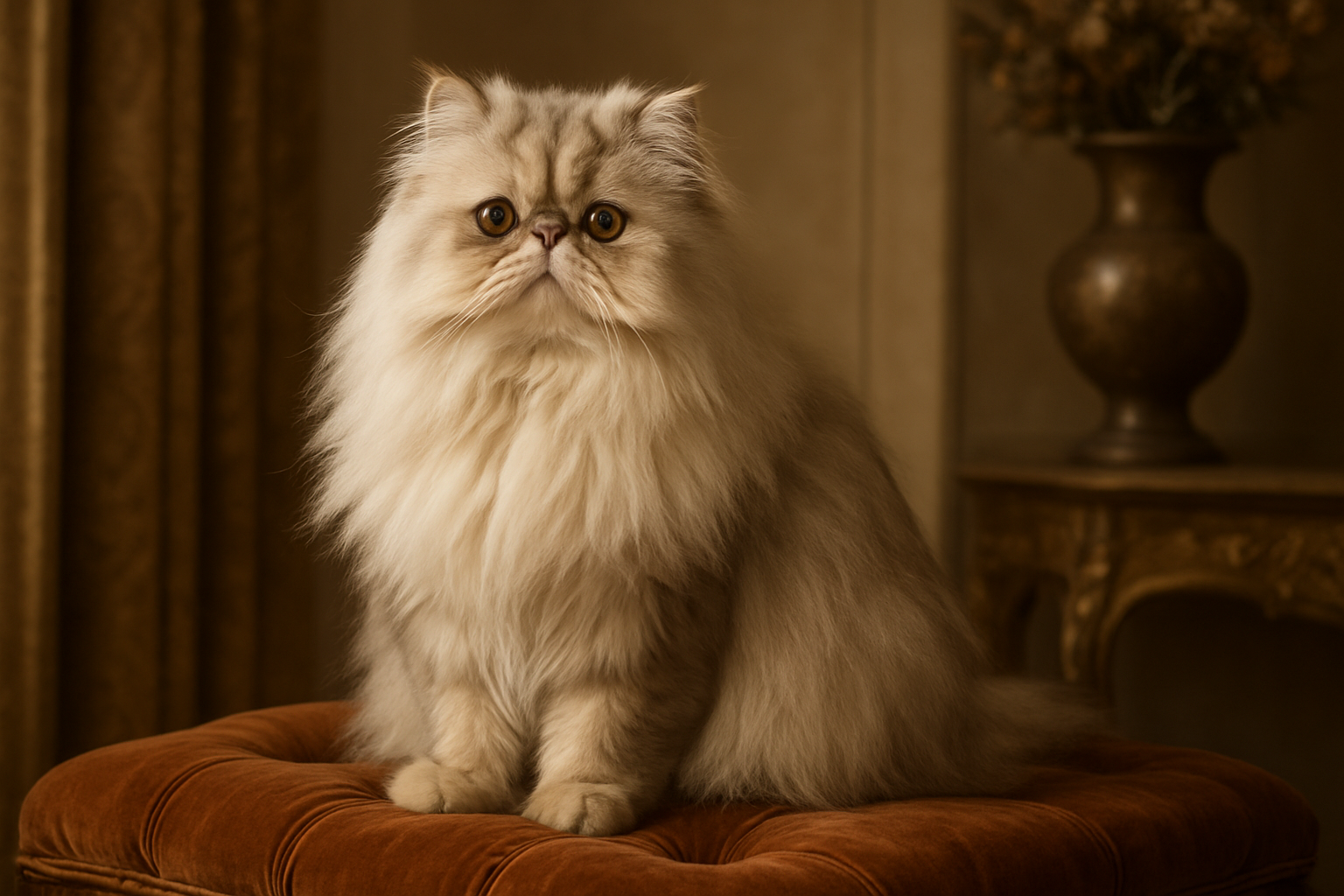
Persian cats are instantly recognizable by their distinctive brachycephalic (flat) face, which sets them apart from most other breeds. This unique facial structure features a shortened nose, prominent eyes, and a rounded skull that creates their signature “pansy-like” expression. Their compact, medium-to-large body type is well-balanced and sturdy, typically weighing between 7-12 pounds.
The Persian’s body is characterized by short, thick legs that support a broad chest and well-rounded midsection. Their tail is short and fluffy, perfectly proportioned to their stocky frame. Unlike the Maine Coon’s elongated athletic build, Persians have a more cobby body type that emphasizes their elegant, refined appearance.
Their large, round eyes are set wide apart and can come in various colors including copper, blue, green, or odd-colored combinations. The flat facial structure, while beautiful, does create some practical considerations for breathing and eating that potential owners should understand before bringing home a Persian companion.
Coat Types and Color Variations
Persian cats boast one of the most luxurious coats in the feline world, featuring long, silky hair that can reach up to 6 inches in length. Their double coat consists of a soft, woolly undercoat topped by longer guard hairs that give them their signature flowing appearance.
The breed comes in an incredible array of colors and patterns, with over 80 recognized color combinations by major cat registries. Popular varieties include:
| Color Category | Examples |
|---|---|
| Solid Colors | White, Black, Blue, Cream, Red |
| Tabby Patterns | Classic, Mackerel, Patched |
| Bi-color | Black and White, Blue and White |
| Himalayan Pattern | Colorpoint with blue eyes |
| Smoke | Silver undercoat with colored tips |
The coat density and length make Persian grooming needs significantly more demanding than many other breeds. Daily brushing becomes essential to prevent matting and maintain their stunning appearance.
Calm and Affectionate Nature
Persian temperament differences shine through their notably gentle and laid-back personality. These cats are known for their quiet, sweet nature and prefer a peaceful environment over high-energy households. They’re often described as “furniture with purrs” due to their love of lounging in comfortable spots around the home.
Persians form strong bonds with their families and enjoy gentle attention, though they’re less likely to demand constant interaction compared to more active breeds. They’re excellent lap cats who appreciate being petted and will often seek out sunny windowsills or soft cushions for extended napping sessions.
Persian energy levels are naturally low to moderate, making them ideal companions for people who prefer a more relaxed pet. They’re not typically climbers or jumpers, preferring ground-level activities and gentle play sessions with feather wands or soft toys.
Common Health Issues and Life Expectancy
Persian health issues are often related to their distinctive facial structure and genetic predispositions. The flat face can lead to breathing difficulties, eye problems, and eating challenges. Common health concerns include:
-
Brachycephalic Airway Syndrome: Breathing difficulties due to shortened airways
-
Polycystic Kidney Disease (PKD): Genetic condition affecting kidney function
-
Progressive Retinal Atrophy: Eye condition that can lead to blindness
-
Hypertrophic Cardiomyopathy: Heart muscle thickening
-
Eye discharge and tear staining: Due to facial structure
Persian lifespan expectancy typically ranges from 12-17 years with proper care and regular veterinary monitoring. Regular health screenings and choosing reputable breeders who test for genetic conditions can help ensure a longer, healthier life for these beautiful cats.
Grooming Requirements and Maintenance
Persian shedding coat care represents one of the most intensive grooming commitments in the cat world. Their luxurious coat requires daily brushing to prevent painful mats and tangles from forming. A high-quality slicker brush and metal comb are essential tools for maintaining their coat’s beauty.
Key grooming requirements include:
-
Daily brushing sessions lasting 15-20 minutes
-
Regular baths every 4-6 weeks or as needed
-
Eye cleaning to prevent tear staining and infection
-
Face fold cleaning to prevent bacterial buildup
-
Professional grooming every 6-8 weeks for trimming and thorough cleaning
The time investment for Persian grooming needs can be substantial, often requiring 1-2 hours per week minimum. Many Persian owners find the grooming routine relaxing and bonding, while others prefer professional grooming services to maintain their cat’s coat properly. Without consistent care, the beautiful Persian coat can quickly become matted and uncomfortable, potentially requiring professional intervention or even shaving in severe cases.
Size and Physical Differences That Matter
Weight and Height Comparisons
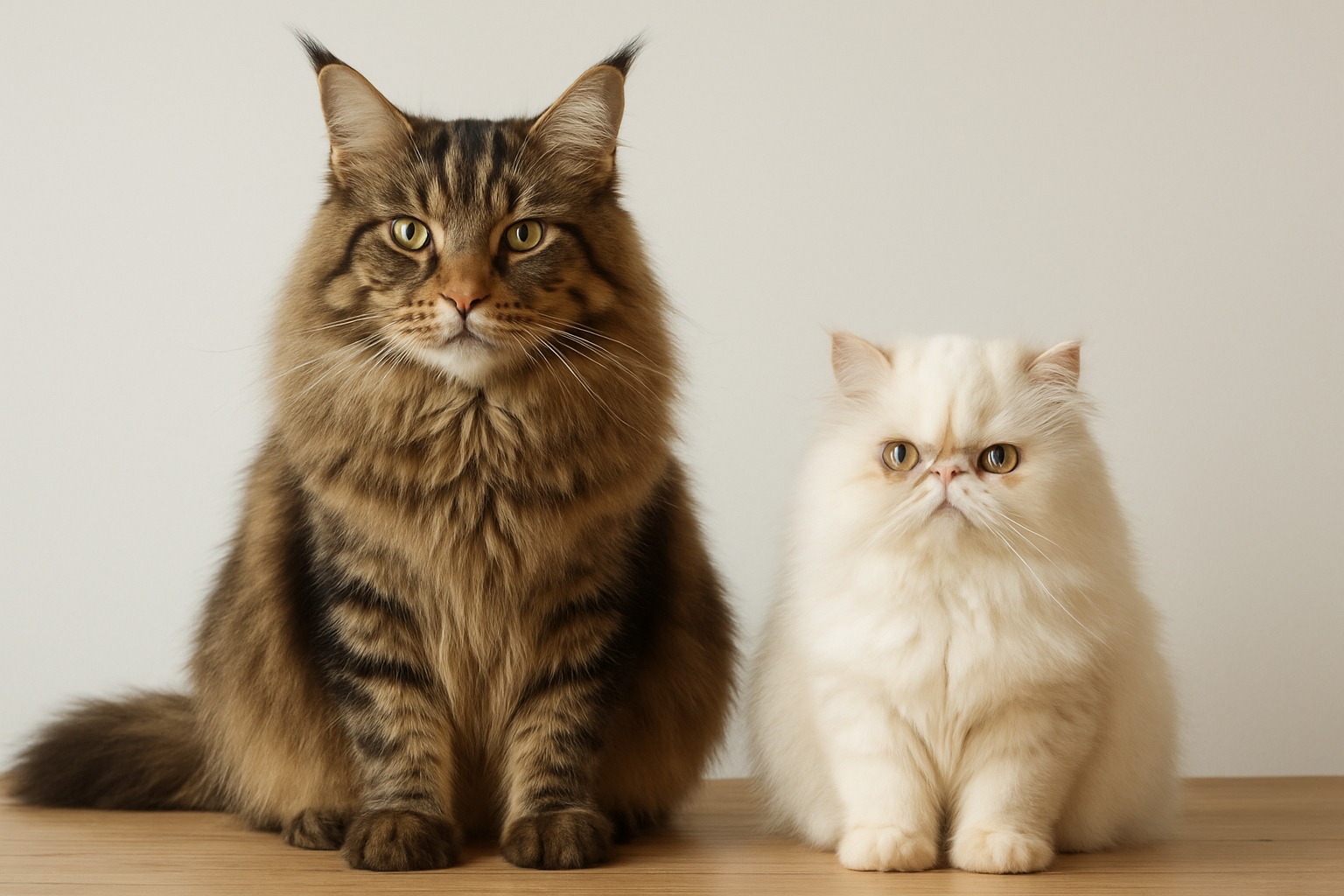
When you put a Maine Coon next to a Persian cat, the Maine Coon vs Persian cat size comparison reveals dramatic differences. Maine Coons are true gentle giants, with males typically weighing between 18-25 pounds and females ranging from 12-15 pounds. Persian cats are much more compact, with males usually weighing 9-14 pounds and females staying between 7-12 pounds.
Height-wise, Maine Coons stand tall at 10-16 inches at the shoulder, while Persians typically measure 8-12 inches. The length difference is even more striking – Maine Coons can stretch up to 40 inches from nose to tail tip, making them one of the longest domestic cat breeds. Persians rarely exceed 24 inches in total length.
| Measurement | Maine Coon Male | Maine Coon Female | Persian Male | Persian Female |
|---|---|---|---|---|
| Weight | 18-25 lbs | 12-15 lbs | 9-14 lbs | 7-12 lbs |
| Height | 12-16 inches | 10-14 inches | 9-12 inches | 8-10 inches |
| Length | 35-40 inches | 30-35 inches | 20-24 inches | 18-22 inches |
Body Structure and Build Variations
The body structure differences between these breeds are like comparing a linebacker to a dancer. Maine Coons have a rectangular, muscular build with a broad chest and sturdy bone structure. Their bodies are built for outdoor survival – long, lean, and athletic despite their impressive size.
Persian cats showcase a completely different architecture. They’re cobby and compact with short, thick legs supporting a rounded, low-to-ground body. Their build is stockier and more substantial for their size, creating that classic “teddy bear” silhouette that Persian lovers adore.
Maine Coons have large, tufted paws that act like natural snowshoes, while Persian paws are smaller and rounder. The Maine Coon’s tail is long and flowing, often as long as their body, whereas Persian tails are shorter and perfectly proportioned to their compact frame.
Facial Features and Expression Differences
The facial differences between Maine Coons and Persians are perhaps the most distinctive aspect of these breeds. Maine Coons have angular, wild-looking faces with high cheekbones, a square muzzle, and large, lynx-tipped ears that give them an alert, intelligent expression. Their eyes are large and expressive, typically oval-shaped and slightly angled.
Persian cats are famous for their flat, “pansy” faces with extremely short noses, round eyes, and small, rounded ears set wide apart. This brachycephalic (flat-faced) structure gives them that sweet, almost human-like expression that melts hearts worldwide.
Maine Coons maintain more of their wild ancestry in their facial features, while Persians have been bred for that ultra-refined, doll-like appearance. The nose leather on a Maine Coon is longer and more prominent, while Persian noses are practically non-existent, sitting flush with their face. These structural differences don’t just affect appearance – they significantly impact breathing, eating habits, and overall health considerations for each breed.
Grooming and Maintenance Requirements
Daily Brushing Needs for Each Breed
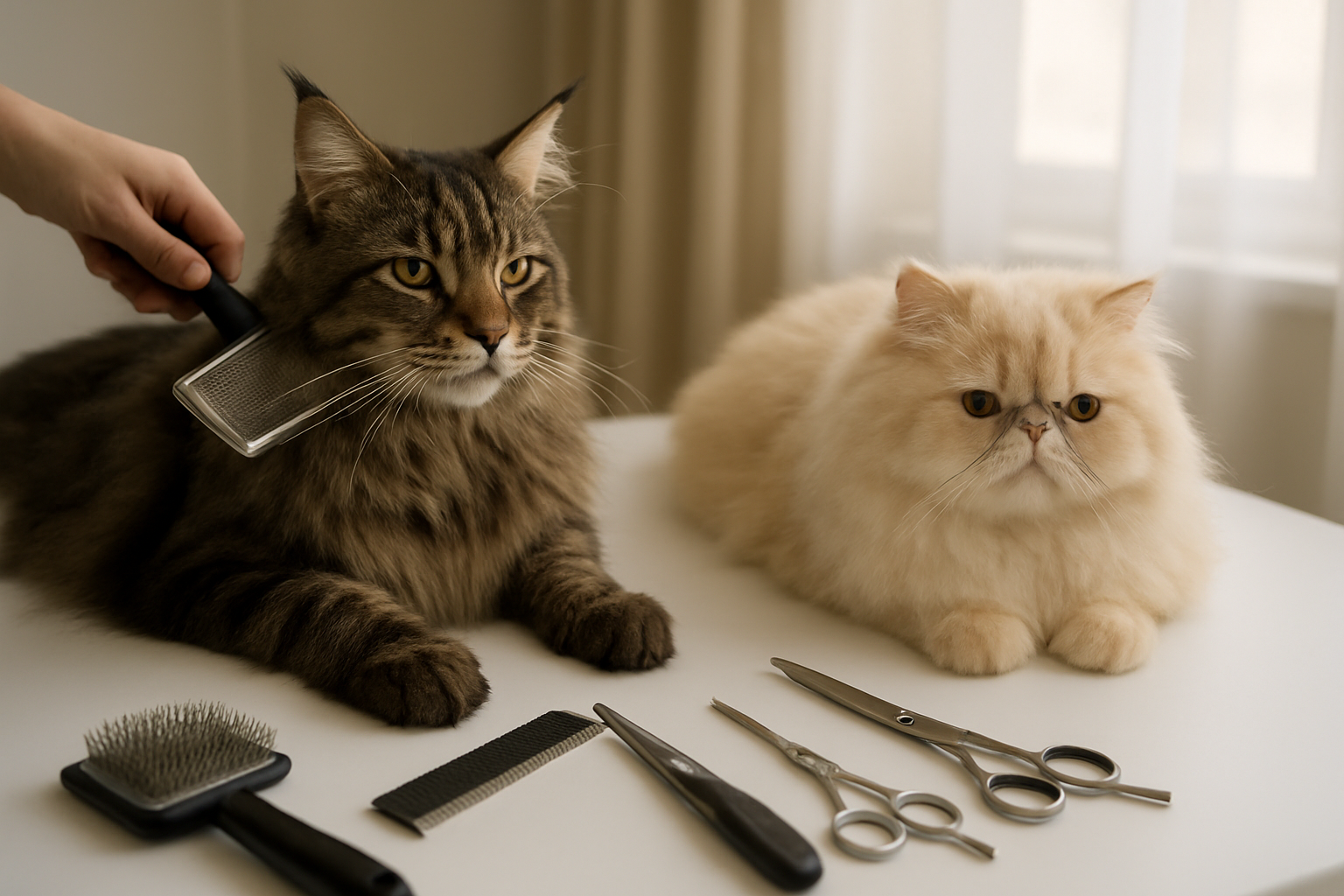
Maine Coon vs Persian grooming needs differ significantly in both time commitment and technique. Maine Coons have a semi-long coat with water-resistant properties, requiring daily brushing to prevent matting around their neck ruff and legs. Their coat naturally repels dirt and debris, making maintenance somewhat easier than expected for such a fluffy breed.
Persian cats demand more intensive daily grooming due to their extremely long, dense double coat that mats easily. Their flat facial structure also requires special attention around the eyes, where tear stains commonly develop. Persian owners typically spend 10-15 minutes daily brushing, while Maine Coon owners need about 5-10 minutes.
| Breed | Daily Brushing Time | Special Areas | Recommended Tools |
|---|---|---|---|
| Maine Coon | 5-10 minutes | Neck ruff, legs, tail | Slicker brush, metal comb |
| Persian | 10-15 minutes | Face, chest, legs, belly | Pin brush, wide-tooth comb, face cloth |
Bathing Frequency and Techniques
Maine Coons rarely need baths thanks to their naturally water-resistant coat that stays relatively clean. Most Maine Coons only require bathing every 3-4 months unless they get into something messy. Their coat dries relatively quickly due to its texture.
Persians need more frequent bathing, typically every 4-6 weeks, to maintain their luxurious appearance and prevent oil buildup. Their dense coat takes much longer to dry completely, often requiring professional blow-drying techniques to prevent matting during the drying process.
Professional Grooming Costs and Considerations
Professional grooming costs vary significantly between these breeds. Maine Coons typically cost $50-80 for a full grooming session, while Persians range from $80-120 due to their more complex coat care needs.
Many Persian owners invest in professional grooming every 6-8 weeks to maintain their cat’s coat health, especially during seasonal transitions. Maine Coon owners often handle most grooming at home, only seeking professional help for nail trims or occasional deep cleans.
Seasonal Shedding Patterns
Both breeds experience seasonal shedding, but the patterns differ considerably. Maine Coons shed their winter undercoat heavily in spring, requiring increased brushing frequency during March and April. Their shedding is manageable with proper daily maintenance.
Maine Coon vs Persian shedding coat care shows Persians shed year-round with slight increases during season changes. Their fine, dense hair gets everywhere and requires consistent vacuuming and lint rolling. Persian hair also tends to stick to fabrics more than Maine Coon hair, making household maintenance more challenging for Persian owners.
Personality and Behavioral Traits Comparison
Activity Levels and Exercise Needs
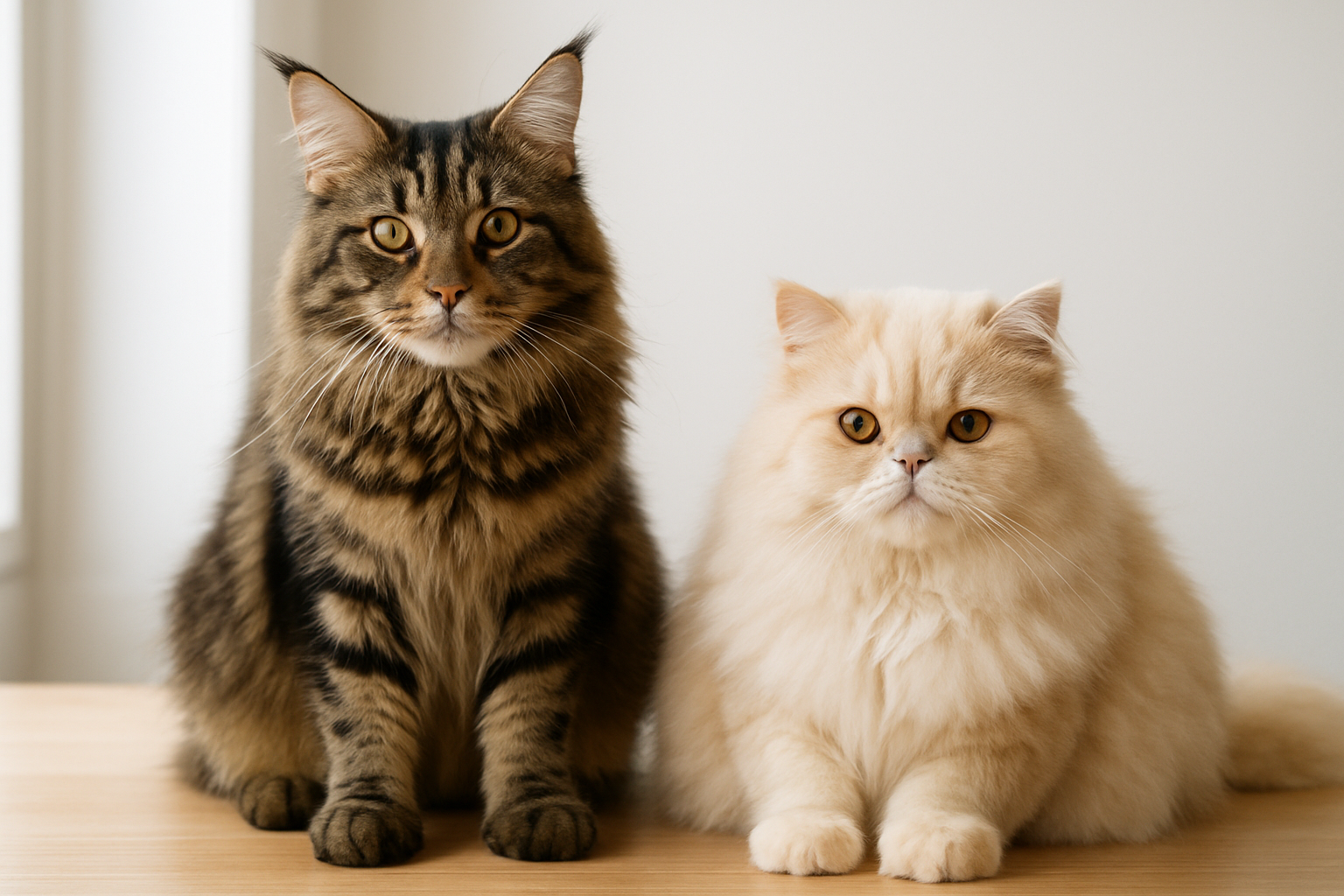
The Maine Coon vs Persian energy levels reveal striking differences that can significantly impact your daily routine. Maine Coons are naturally active cats with moderate to high energy levels throughout their lives. They love interactive play sessions, climbing tall cat trees, and exploring every corner of your home. These gentle giants typically need 20-30 minutes of active playtime daily, split into multiple sessions to keep them mentally stimulated and physically fit.
Persian cats, by contrast, are the couch potatoes of the feline world. They prefer lounging in sunny spots and gentle, low-key activities. A Persian’s daily exercise needs are minimal – usually 10-15 minutes of light play with feather toys or laser pointers. They’re perfectly content watching the world go by from their favorite perch rather than chasing after every moving object.
Maine Coons often display dog-like personality traits, including a love for fetch games and following their humans around the house. They maintain playful kitten-like behavior well into their senior years. Persian cats mature into calm, serene companions who save their energy for short bursts of gentle play before returning to their preferred state of relaxation.
Social Interaction with Family and Strangers
When comparing Maine Coon vs Persian temperament differences, their social personalities couldn’t be more distinct. Maine Coons are incredibly outgoing and friendly with both family members and strangers. They typically greet visitors at the door, show genuine curiosity about new people, and often become the social ambassadors of the household. These cats thrive on human interaction and genuinely enjoy being part of family activities.
Maine Coon vs Persian for families kids shows clear advantages for the Maine Coon. Their patient, gentle nature makes them exceptional with children of all ages. They tolerate handling well and rarely resort to scratching or biting, even when overstimulated by enthusiastic young hands. Maine Coons often form special bonds with kids and become loyal playmates.
Persian cats are more selective with their affections. While deeply devoted to their immediate family, they tend to be shy or reserved around strangers. They need time to warm up to new people and may hide when visitors arrive. With their own family, Persians are loving and affectionate but on their own terms. They’re better suited for quieter households with older children who understand gentle handling.
Maine Coon vs Persian multi-pet households also differs significantly. Maine Coons generally adapt well to other pets, including dogs and other cats. Their easygoing nature helps them establish peaceful relationships. Persian cats can coexist with other pets but may struggle with high-energy animals that disrupt their calm environment.
Intelligence and Trainability Factors
Maine Coons consistently rank among the most intelligent domestic cat breeds, displaying remarkable problem-solving abilities and learning capacity. They can master complex tricks, respond to their names reliably, and even learn to walk on leashes with proper training. Many Maine Coon owners successfully teach their cats to open doors, fetch specific objects, and follow multi-step commands.
Their intelligence extends to emotional awareness – Maine Coons often sense their owner’s moods and provide comfort during difficult times. They’re highly food-motivated, making positive reinforcement training sessions productive and enjoyable for both cat and owner.
Persian cats possess average intelligence but approach learning differently than Maine Coons. They’re less motivated by food rewards and more responsive to gentle encouragement and routine-based training. While they won’t perform elaborate tricks, Persians can learn basic commands and house rules effectively. Their stubborn streak means training requires patience and consistency rather than speed.
Maine Coon vs Persian beginner friendly clearly favors Maine Coons for first-time cat owners. Their trainable nature, predictable responses, and forgiving personalities make mistakes less costly. Persian cats require owners who understand feline psychology and can work within their more independent, selective nature. Both breeds are intelligent in their own ways, but Maine Coons demonstrate their smarts more obviously through interactive behaviors and adaptability.
Health Considerations and Veterinary Care
Breed-Specific Health Risks and Conditions
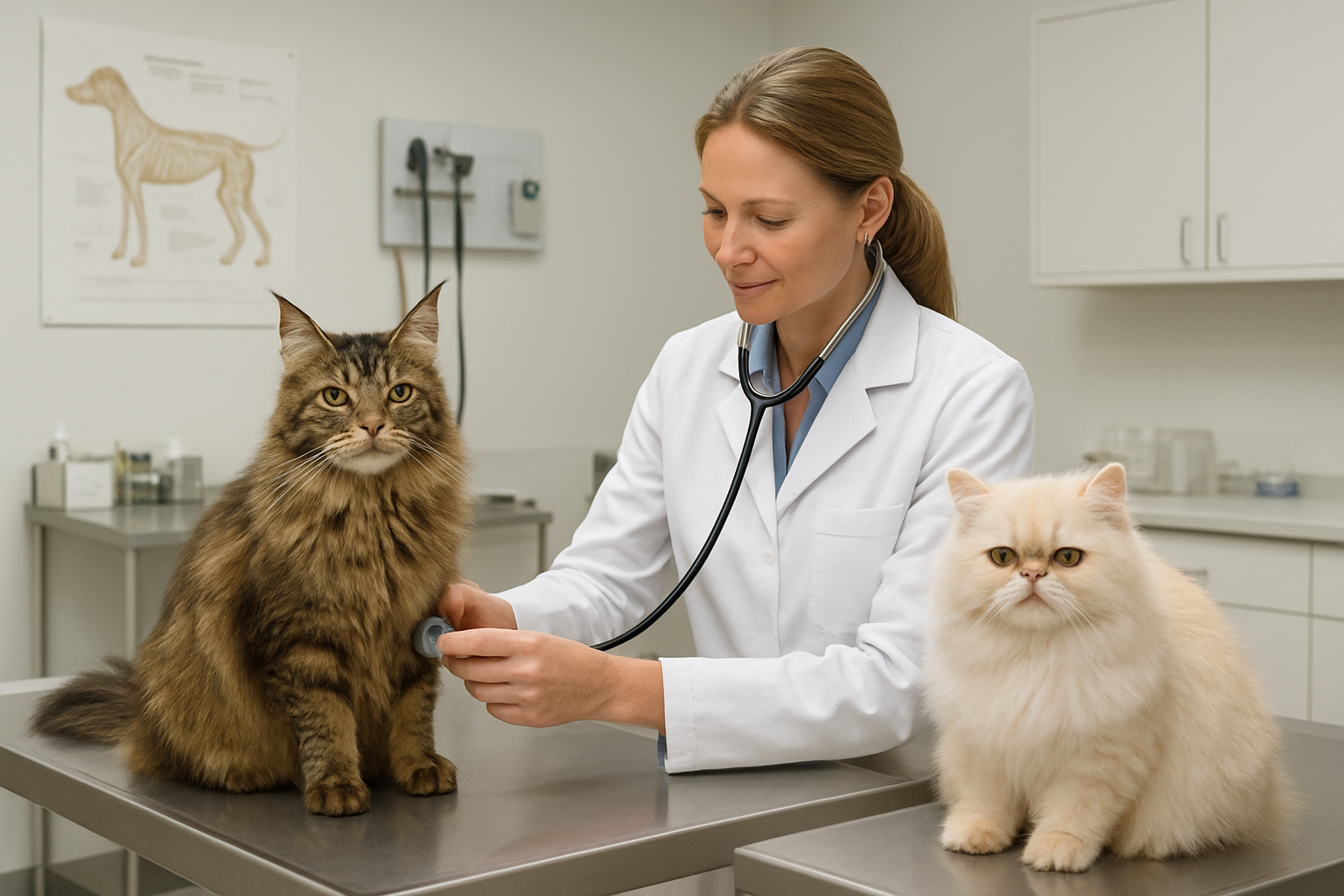
Maine Coon vs Persian health issues reveal distinct patterns that every potential owner should understand. Maine Coons face several hereditary conditions, with hypertrophic cardiomyopathy (HCM) being the most significant concern. This heart condition affects approximately 30% of Maine Coons and can lead to sudden cardiac death if undetected. Hip dysplasia also occurs more frequently in this breed due to their large size, potentially causing mobility issues later in life.
Polycystic kidney disease (PKD) presents another serious risk, with fluid-filled cysts gradually reducing kidney function over time. Spinal muscular atrophy, though less common, can cause muscle weakness and coordination problems in affected cats.
Persian cats battle their own set of health challenges, primarily stemming from their flat facial structure. Brachycephalic obstructive airway syndrome creates breathing difficulties, especially during hot weather or physical exertion. Their compressed tear ducts lead to chronic eye discharge and increased risk of eye infections.
Polycystic kidney disease affects Persians even more frequently than Maine Coons, with studies showing up to 40% prevalence in some bloodlines. Their long coat predisposes them to skin conditions and matting-related dermatitis if grooming isn’t maintained properly.
| Health Condition | Maine Coon Risk | Persian Risk |
|---|---|---|
| Hypertrophic Cardiomyopathy | High | Low |
| Polycystic Kidney Disease | Moderate | High |
| Hip Dysplasia | Moderate | Low |
| Breathing Issues | Low | High |
| Eye Problems | Low | High |
Preventive Care and Regular Check-up Needs
Both breeds require tailored preventive care schedules that address their specific vulnerabilities. Maine Coons need annual echocardiograms starting at age one to screen for HCM, with follow-ups every 12-18 months. Hip and elbow X-rays around 18-24 months help detect dysplasia early when treatment options are most effective.
Kidney function monitoring through blood work and urinalysis should begin by age three for both breeds, with increased frequency after age seven. Persian cats require more frequent eye examinations due to their predisposition to corneal ulcers and other ocular issues.
Weight management proves crucial for both breeds but for different reasons. Maine Coons need monitoring to prevent joint stress from excess weight, while Persians require careful weight control to avoid respiratory complications. Regular dental cleanings become essential since both breeds can develop periodontal disease, though Persians may need more frequent attention due to their facial structure affecting bite alignment.
Maine Coon vs Persian lifespan expectancy shows Maine Coons typically living 12-15 years, while Persians average 10-17 years. These ranges depend heavily on preventive care quality and early detection of breed-specific conditions.
Insurance and Healthcare Cost Expectations
Healthcare expenses vary significantly between these breeds based on their different health profiles. Maine Coon owners should budget $800-1,500 annually for routine care, with potential cardiac monitoring adding $200-400 yearly. Emergency treatment for HCM can range from $2,000-8,000 depending on severity and treatment approach.
Persian cat healthcare costs typically run $1,000-1,800 annually due to more frequent grooming-related skin treatments and eye care needs. Respiratory issues may require specialized veterinary care costing $500-2,000 per incident.
Pet insurance premiums reflect these breed-specific risks, with Maine Coons often facing higher cardiac coverage costs and Persians seeing elevated premiums for respiratory and eye conditions. Comprehensive coverage typically costs $30-60 monthly for Maine Coons and $35-70 for Persians, depending on age and coverage level.
Many insurers now offer breed-specific policies that provide enhanced coverage for known hereditary conditions while maintaining reasonable premiums for routine care.
Genetic Testing Recommendations
DNA testing has become invaluable for responsible breeding and early health management. Maine Coon genetic panels should include HCM mutation screening, PKD testing, and spinal muscular atrophy analysis. These tests cost $150-300 but provide crucial information for breeding decisions and health planning.
Persian genetic testing focuses primarily on PKD screening, which costs approximately $50-100. Some panels also include testing for progressive retinal atrophy and other eye conditions common in the breed.
Reputable breeders provide genetic testing results for parent cats, but additional testing may be worthwhile for adopted cats or those from unknown backgrounds. Early genetic screening allows owners to implement preventive measures and work with veterinarians to create targeted health monitoring protocols.
Testing results help veterinarians customize care plans, potentially catching conditions before clinical signs appear. This proactive approach often leads to better outcomes and can significantly reduce long-term healthcare costs for both breeds.
Living Environment and Space Requirements
Apartment vs House Suitability
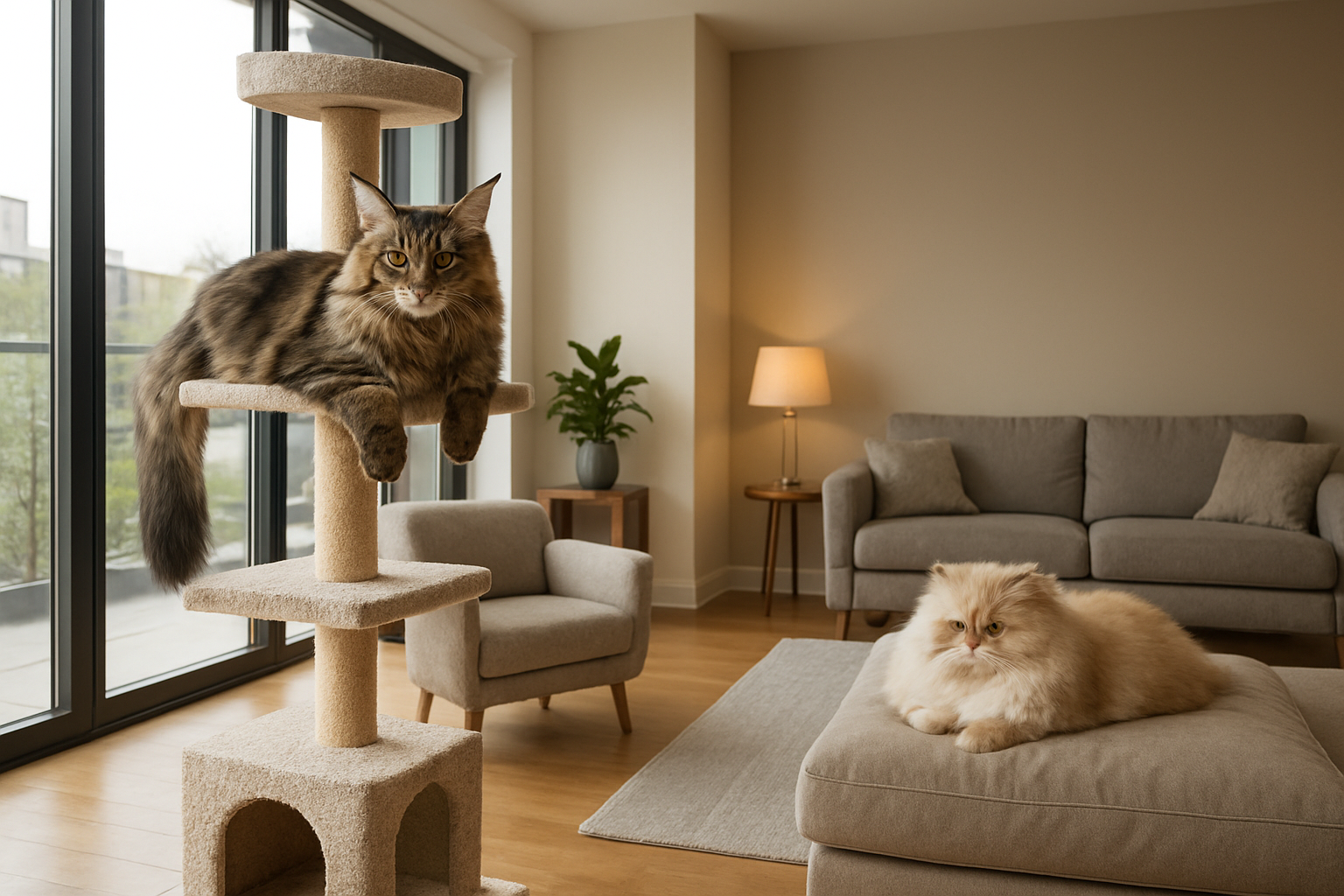
Maine Coon vs Persian apartment living capabilities differ significantly due to their distinct activity levels and space requirements. Maine Coons, despite their impressive size, adapt surprisingly well to apartment living when their needs are met. These gentle giants are content in smaller spaces as long as they have vertical territory like cat trees and shelves to explore. Their calm demeanor and moderate Maine Coon vs Persian energy levels make them suitable apartment companions, though they appreciate having room to stretch their long bodies.
Persian cats excel in apartment settings due to their naturally sedentary lifestyle. Their preference for lounging and minimal activity requirements make them ideal for compact living spaces. Persians don’t feel the urge to climb or explore extensively, making them perfect for owners with limited square footage.
| Living Space | Maine Coon Suitability | Persian Cat Suitability |
|---|---|---|
| Studio/1BR Apartment | Good (with vertical space) | Excellent |
| 2+ BR Apartment | Excellent | Excellent |
| House with Yard | Excellent | Good |
| Multi-level Home | Excellent | Good |
Both breeds can thrive in houses, but Maine Coons take fuller advantage of larger spaces. They enjoy exploring different rooms and levels, while Persians typically claim a few favorite spots and stick to them.
Indoor vs Outdoor Lifestyle Preferences
Maine Coon vs Persian daily exercise needs shape their outdoor preferences dramatically. Maine Coons retain strong hunting instincts and curiosity about the outside world. They often enjoy supervised outdoor time, leash walking, or secure outdoor enclosures. Their robust build and thick coat make them well-suited for outdoor adventures, though they’re perfectly content as indoor cats when provided with adequate stimulation.
Many Maine Coon owners create “catios” or screened porches to satisfy their cat’s desire for fresh air and outdoor observation without safety risks. These cats love watching birds, feeling breezes, and experiencing seasonal changes from a secure vantage point.
Persian cats strongly prefer indoor lifestyles. Their long, luxurious coats collect debris easily, and their flat faces make them vulnerable to respiratory issues in dusty or polluted outdoor environments. Most Persians show little interest in venturing outside, preferring the comfort and safety of indoor surroundings.
Persian vs Maine Coon shedding coat care becomes more challenging with outdoor exposure. Persian coats mat and tangle quickly when exposed to outdoor elements, while Maine Coon coats, though they shed, handle outdoor conditions much better.
Climate and Weather Considerations
Maine Coon vs Persian temperament differences extend to climate tolerance. Maine Coons originated in harsh Maine winters, developing thick, water-resistant double coats that excel in cold weather. They actually prefer cooler temperatures and can become uncomfortable in hot, humid climates without adequate air conditioning.
Persian cats struggle more with temperature extremes. Their flat facial structure creates breathing difficulties in hot weather, making them prone to overheating. Their dense coats provide warmth but can cause discomfort during summer months. Persian owners in warm climates must ensure constant access to cool, air-conditioned spaces.
Climate Tolerance Comparison:
Maine Coons:
-
Excellent cold weather tolerance
-
Moderate heat tolerance (with cooling options)
-
Natural weatherproofing in coat
-
Active in various weather conditions
Persian Cats:
-
Poor heat tolerance due to facial structure
-
Good cold weather tolerance (indoors)
-
Coat requires climate-controlled environment
-
Minimal weather exposure preference
Both breeds benefit from climate-controlled indoor environments, but Maine Coons show greater adaptability to weather variations. Persian owners must be particularly vigilant about temperature regulation to prevent breathing difficulties and coat problems.
Cost Analysis and Budgeting Guide
Initial Purchase Price Ranges
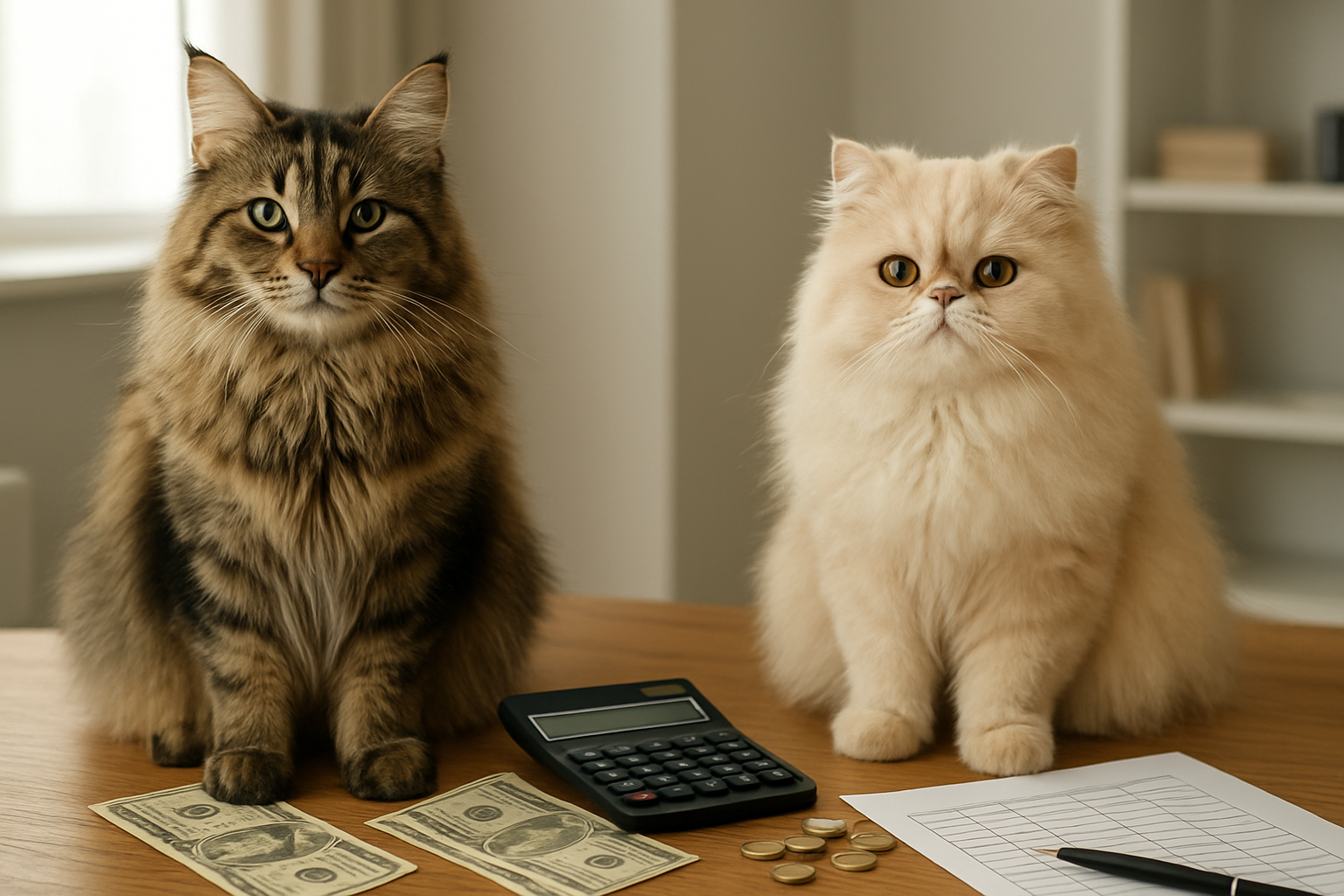
Maine Coon cats typically cost between $400-$2,000 from reputable breeders, with champion bloodlines reaching $3,000 or more. Persian cats command similar prices, ranging from $500-$1,800 for pet-quality cats, while show-quality Persians can exceed $5,000. Adoption from shelters offers a more budget-friendly option, with fees usually between $50-$300 for either breed.
Geographic location significantly impacts pricing, with urban areas commanding premium rates. Breeder reputation, health testing, and registration papers also influence costs. Both breeds require initial supplies including high-quality carriers ($50-$150), scratching posts ($30-$100), and specialized bowls ($20-$50).
Monthly Food and Supply Expenses
Both Maine Coons and Persians require premium nutrition, but their food costs differ substantially. Maine Coons consume 20-30% more food due to their larger size, averaging $30-$50 monthly for high-quality dry and wet food. Persians typically need $20-$35 monthly for the same quality nutrition.
| Expense Category | Maine Coon | Persian |
|---|---|---|
| Premium Food | $30-$50 | $20-$35 |
| Litter | $15-$25 | $12-$20 |
| Grooming Supplies | $10-$15 | $15-$25 |
| Treats & Toys | $10-$20 | $8-$15 |
Litter costs vary based on preference, but both breeds benefit from premium, dust-free options. Maine Coons require larger litter boxes and consume more litter volume. Persian cats need specialized grooming tools including slicker brushes, metal combs, and detangling sprays, pushing their monthly grooming supply costs higher.
Annual Veterinary and Grooming Costs
Routine veterinary care runs $200-$400 annually for healthy cats of both breeds, including vaccinations, wellness exams, and preventive treatments. However, breed-specific health screenings add extra costs. Maine Coons require annual cardiac screenings for hypertrophic cardiomyopathy ($150-$300), while Persians need regular eye examinations for inherited conditions ($100-$200).
Professional grooming creates the most significant cost difference between breeds. Maine Coons need professional grooming every 6-8 weeks at $50-$80 per session, totaling $300-$500 annually. Persian cats require grooming every 4-6 weeks at $60-$100 per session, resulting in $500-$800 yearly expenses.
Emergency veterinary costs average $800-$2,500 per incident for both breeds. Pet insurance premiums range from $15-$40 monthly, with Persian cats often carrying higher premiums due to their predisposition to respiratory and eye issues.
Long-term Financial Commitment
Over a 12-15 year lifespan, total ownership costs range dramatically between breeds. Maine Coons typically cost $15,000-$25,000 lifetime, while Persian cats average $18,000-$30,000 due to higher grooming and potential medical expenses.
Senior care becomes increasingly expensive for both breeds. Persians face higher risks of kidney disease, dental issues, and breathing problems requiring specialized treatment. Maine Coons may develop joint issues and cardiac conditions needing ongoing medication and monitoring.
Budget at least $1,000 annually for unexpected medical expenses, regardless of breed choice. Creating an emergency fund equivalent to $3,000-$5,000 helps manage sudden health crises. Consider pet insurance early in your cat’s life when premiums are lowest and coverage is most comprehensive.
Which Breed Suits Your Lifestyle Best
Family with Children Considerations
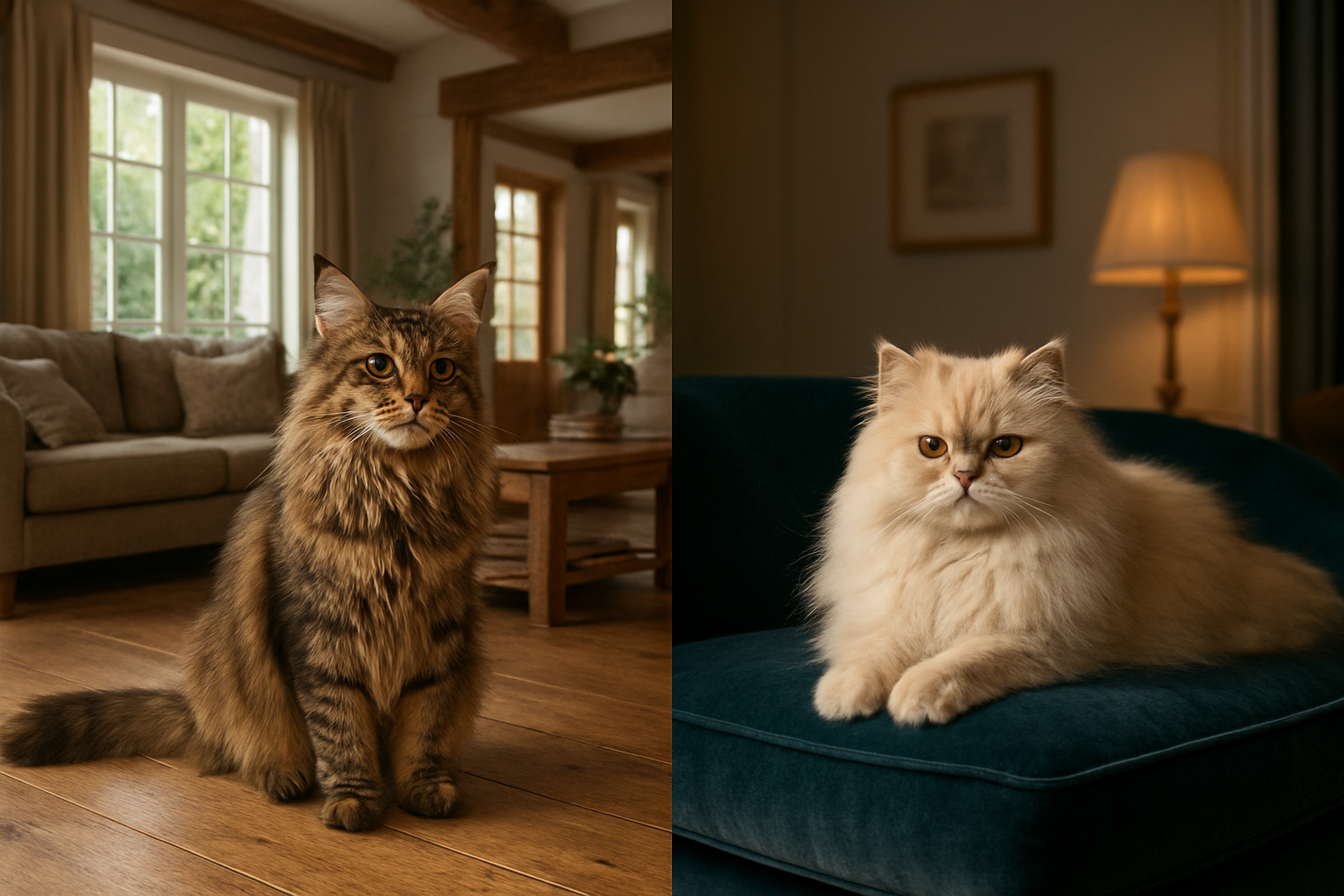
Maine Coon vs Persian for families with kids comes down to energy levels and interaction styles. Maine Coons shine as family pets because of their patient, dog-like personality that meshes perfectly with active households. These gentle giants actively seek out human interaction and handle the unpredictable behavior of children with remarkable grace. Their playful nature matches well with kids who want an interactive pet that can keep up with games and adventures.
Persian cats take a different approach to family life. While they’re affectionate, their calm temperament means they prefer quieter interactions. Persian temperament differences show they’re better suited for families with older, gentler children who understand boundaries. Young kids might find Persians less engaging since these cats don’t typically initiate play or seek constant attention.
Maine Coon vs Persian energy levels play a huge role in family dynamics. Maine Coons bring enthusiasm to family activities and can handle the chaos of busy households. They’re resilient enough to recover quickly if a child accidentally steps on a tail or gets too rough during play. Persians need more careful handling and quiet spaces to retreat when family life gets overwhelming.
Senior Owner Compatibility
Senior cat owners face unique considerations when choosing between these breeds. Maine Coon vs Persian grooming needs become especially important for older adults who might have mobility limitations. Persian cats require daily brushing and professional grooming every 6-8 weeks to prevent matting, which can be physically demanding and expensive over time.
Maine Coons offer a more manageable grooming routine despite their size. Their coat naturally resists matting, and weekly brushing sessions are usually sufficient. This makes them more practical for seniors who want a beautiful long-haired cat without the intensive maintenance requirements.
Maine Coon vs Persian vocalization habits also matter for senior living situations. Maine Coons are known for their chirping, trilling sounds and tendency to “talk” with their owners, creating engaging conversations. Persians are typically quieter, which might appeal to seniors who prefer a peaceful environment or live in apartments with noise restrictions.
The size difference affects daily care routines. Maine Coons’ larger litter boxes need more frequent cleaning, and their size makes them harder to lift for vet visits. However, their robust health profile often means fewer emergency vet trips compared to Persians, who face more breed-specific health challenges.
First-Time Cat Owner Recommendations
Maine Coon vs Persian beginner friendly characteristics reveal significant differences for new cat owners. Maine Coons typically adapt better to first-time owner mistakes and are more forgiving of inconsistent routines. Their hardy constitution and straightforward care requirements make them excellent starter cats for people learning the ropes.
Persian cats demand more specialized knowledge from day one. New owners must master proper brushing techniques, understand their breathing limitations due to flat faces, and recognize signs of eye problems early. The learning curve is steeper, and mistakes in grooming or care can quickly lead to health issues.
Maine Coon vs Persian apartment living suitability varies greatly. Maine Coons need more vertical space and interactive elements to stay mentally stimulated, but they adapt well to indoor life when provided with adequate enrichment. Their size means they need sturdy furniture and larger accessories, which first-time owners might not anticipate.
Maine Coon vs Persian multi-pet households integration shows Maine Coons typically adjust better to other pets. Their social nature helps them establish pecking orders without excessive conflict. Persians can be more territorial and may struggle with the stress of sharing space, especially if introduced poorly.
For beginners, Maine Coons offer a more predictable experience with clearer communication cues and more resilient health. Their dog-like personality traits make them easier to read and bond with, while Persians require more patience and observation skills to understand their subtle communication style.
7 FAQ
Are Maine Coons or Persian cats better for families with children?
Maine Coons excel with families and kids due to their patient, dog-like personality and gentle nature. These gentle giants tolerate children’s handling well and often form strong bonds with family members. Persian cats, while affectionate, prefer quieter households and may feel overwhelmed by active children. Their long coats also require protection from rough play.
Which breed requires more grooming maintenance?
Persian cats demand significantly more grooming than Maine Coons. Persian shedding and coat care requires daily brushing to prevent matting of their dense, long fur. Maine Coon grooming needs involve 2-3 brushing sessions weekly. Persian owners spend 15-20 minutes daily on coat maintenance, while Maine Coon owners typically need only 10 minutes every few days.
What are the main temperament differences between these breeds?
Maine Coon vs Persian temperament differences are striking. Maine Coons display outgoing, social personalities with dog-like traits including following owners around and greeting visitors. They’re naturally curious and playful throughout their lives. Persian cats tend toward calm, reserved temperaments, preferring peaceful environments and gentle interactions over active play sessions.
Do Maine Coons or Persians have more health issues?
Maine Coon vs Persian health issues vary by breed-specific concerns. Maine Coons face risks of hypertrophic cardiomyopathy, hip dysplasia, and spinal muscular atrophy. Persian cats commonly develop breathing problems due to their flat faces, kidney disease, and eye conditions. Both breeds benefit from regular veterinary screenings, though Persian respiratory issues often require more frequent monitoring.
Which breed works better for apartment living?
Maine Coon vs Persian apartment living suitability depends on space and activity levels. Persian cats adapt well to smaller spaces due to their calm nature and lower exercise requirements. Maine Coons need more room to explore and climb, though they can adjust to apartments with adequate vertical space, cat trees, and interactive toys for mental stimulation.
How do their energy levels and exercise needs compare?
Maine Coon vs Persian energy levels differ considerably. Maine Coons maintain moderate to high energy throughout their lives, requiring daily interactive play sessions and mental challenges. Maine Coon vs Persian daily exercise needs show Persians prefer gentle activities like feather toys over vigorous play. Maine Coons need 20-30 minutes of active play, while Persians are satisfied with 10-15 minutes.
Which breed is more beginner-friendly for first-time cat owners?
Maine Coon vs Persian beginner friendly comparison favors Maine Coons for new cat owners. Their adaptable personalities, moderate grooming requirements, and social nature make them easier to handle. Persian cats require extensive grooming knowledge, understanding of breathing issues, and patience with their reserved personalities, making them more challenging for inexperienced owners seeking low-maintenance companions.
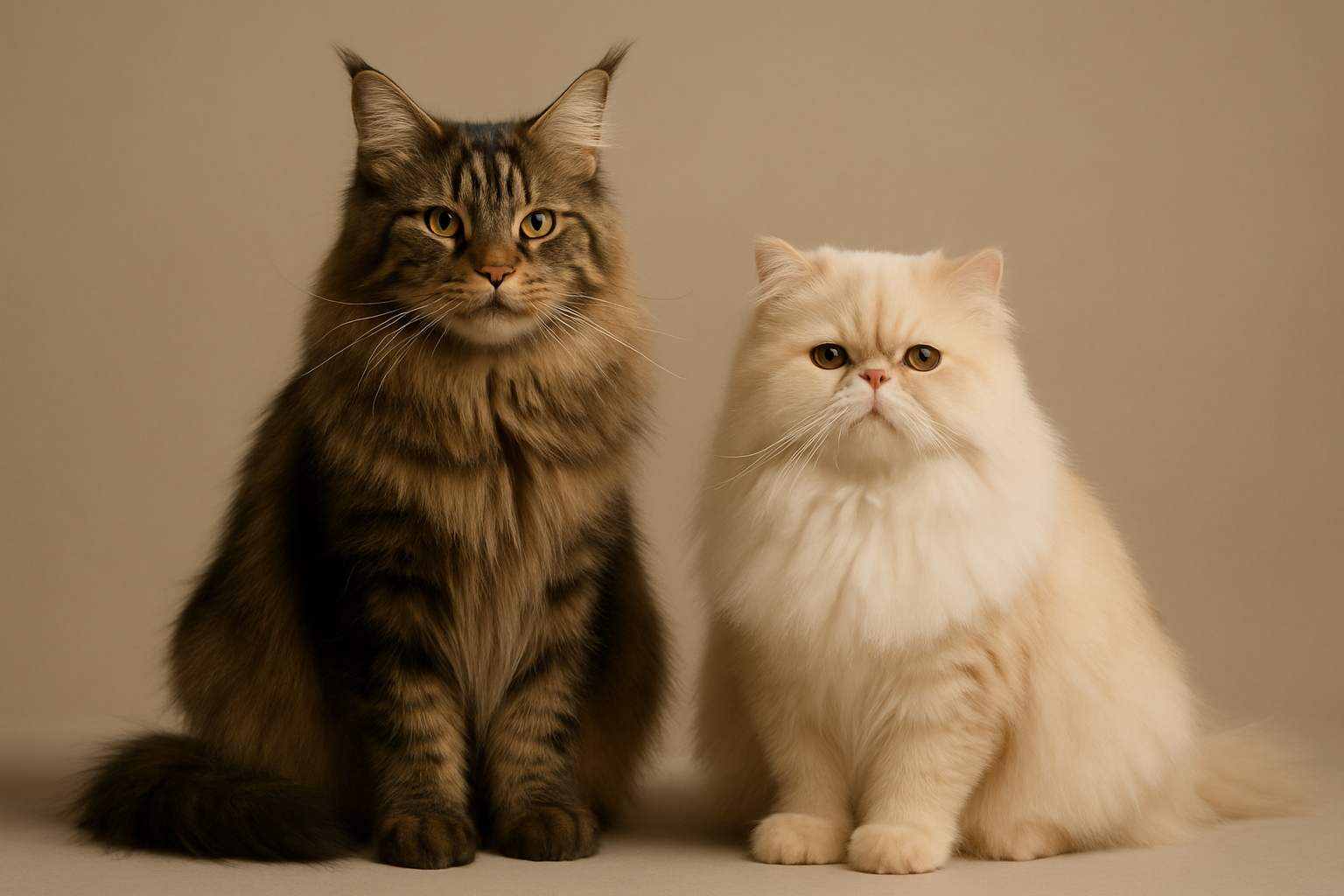
Both Maine Coons and Persians bring their own special magic to a home, but they’re definitely different cats for different people. Maine Coons win hearts with their playful, dog-like personalities and easier grooming needs, making them great for busy families who want an interactive companion. Persians charm their way into lives with their calm, regal presence and stunning looks, though they need someone who enjoys daily grooming sessions and prefers a quieter household vibe.
Your lifestyle really drives this decision. If you’re looking for a cat that plays fetch, follows you around, and doesn’t mind kids running around, the Maine Coon is your match. But if you want a beautiful, serene companion who’s happy to lounge and be admired while you binge-watch shows, the Persian fits perfectly. Either way, you’re getting a loyal friend who’ll stick around for many years – just make sure you’re ready for the grooming commitment with a Persian or the space needs of a Maine Coon. Take an honest look at your daily routine, living situation, and what you really want from a feline friend, and the right choice will become pretty clear.