

Blog
Maine Coon Cat vs Persian Cat: 7 Shocking Differences to Decide Which One!

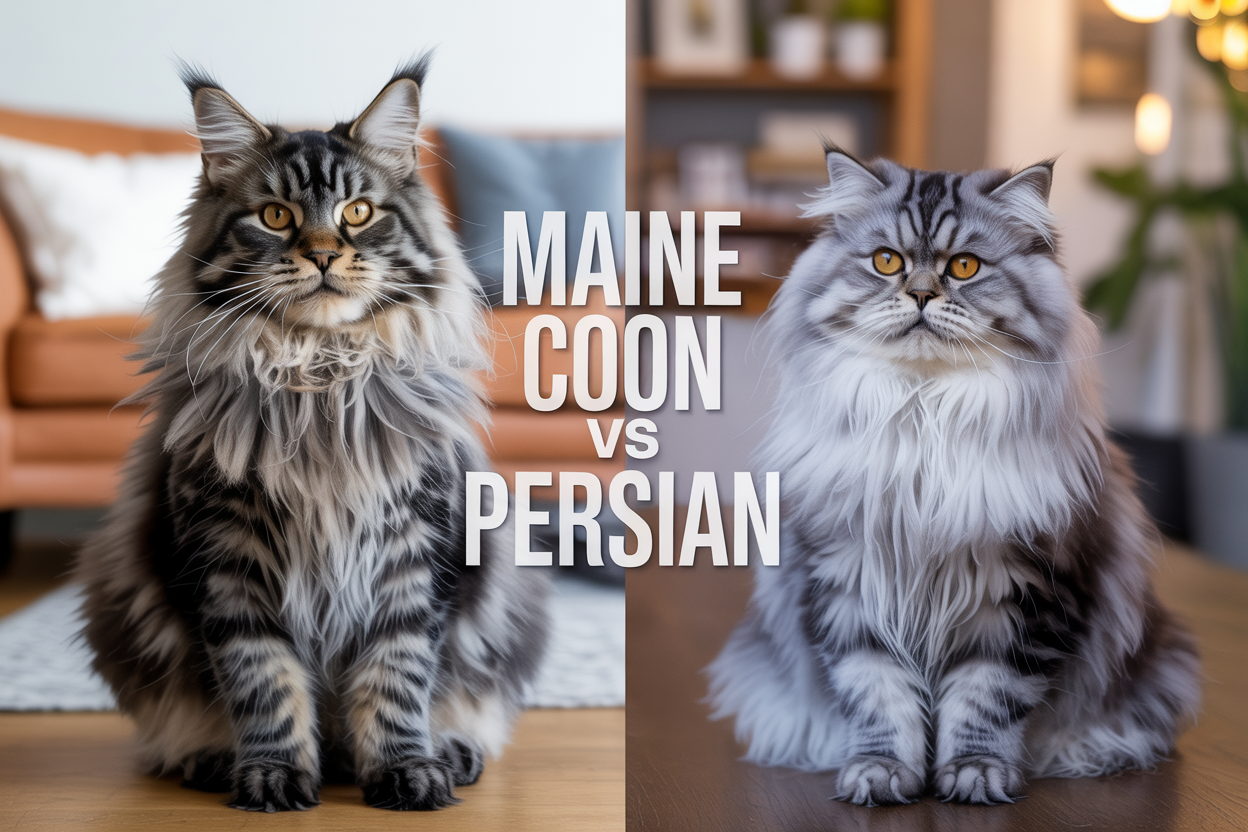
Maine Coon Cat vs Persian Cat: Shocking Differences to Decide Which One!

Choosing between a Maine Coon and Persian cat feels overwhelming when both breeds are absolutely stunning. These two popular cats couldn’t be more different, and picking the wrong one for your lifestyle could lead to years of frustration.
This guide is perfect for potential cat owners, families considering their first feline companion, and anyone torn between these two gorgeous breeds. We’ll break down the Maine Coon Cat vs Persian Cat debate with 7 shocking differences that will make your decision crystal clear.
You’ll discover the dramatic size comparison between Maine Coons and Persians that might surprise you. We’ll also reveal the grooming differences that could change your daily routine completely. Plus, we’ll uncover the temperament variations that determine which breed fits your family best.
By the end, you’ll know exactly which cat matches your home, budget, and lifestyle perfectly.
Physical Appearance That Sets Them Apart
Size and Weight Differences That Will Surprise You
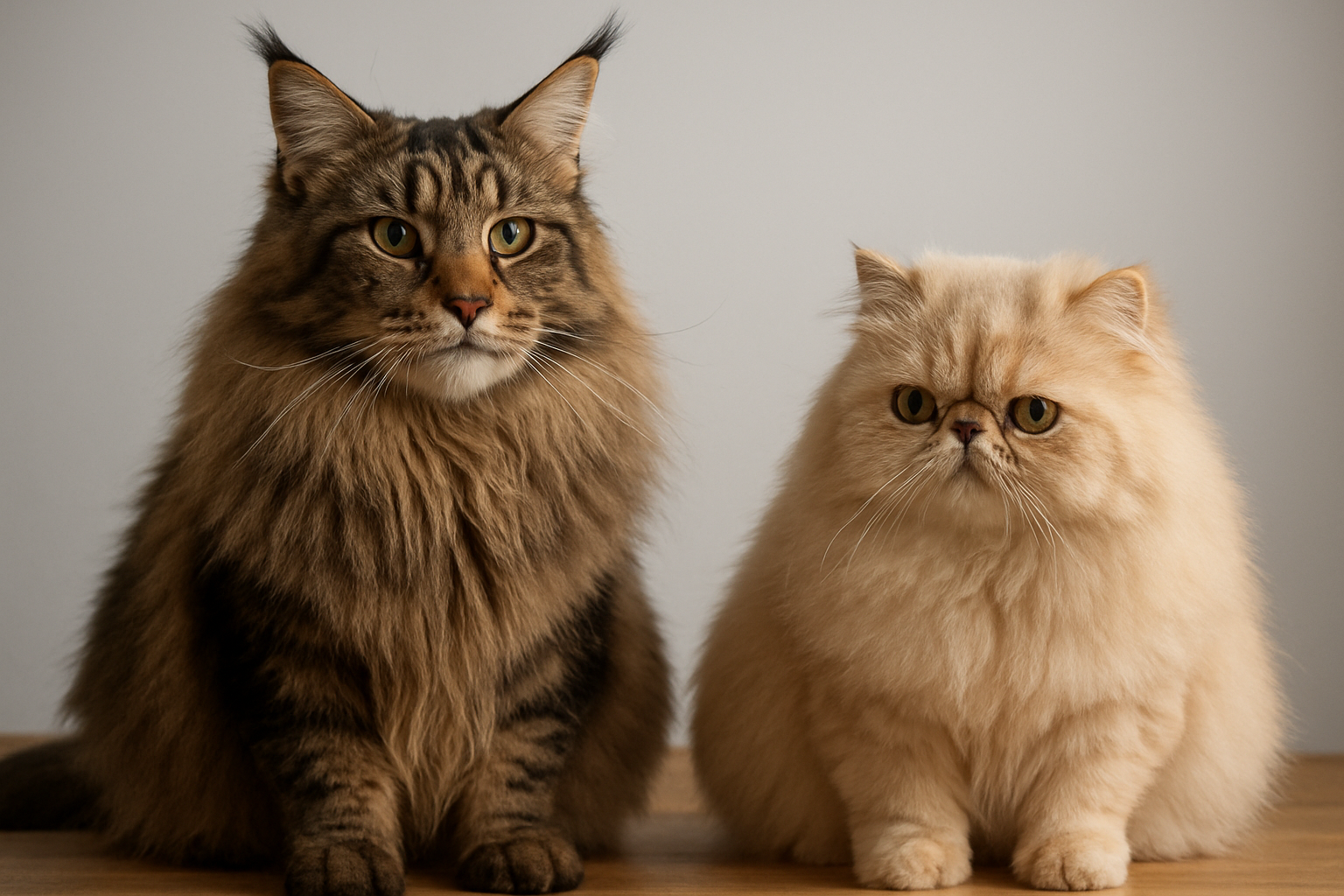
Maine Coon Cat vs Persian size comparison 2025 reveals some genuinely eye-opening differences. Maine Coons absolutely dwarf Persians when it comes to overall size. Adult male Maine Coons typically weigh between 15-25 pounds, while females range from 10-15 pounds. Compare this to Persians, where males usually max out at 12-14 pounds and females stay between 7-10 pounds.
The length difference is equally dramatic. Maine Coons can stretch up to 40 inches from nose to tail tip, making them one of the longest domestic cat breeds. Persians, on the other hand, maintain a more compact build at around 24-30 inches in total length.
| Feature | Maine Coon | Persian |
|---|---|---|
| Male Weight | 15-25 lbs | 12-14 lbs |
| Female Weight | 10-15 lbs | 7-10 lbs |
| Body Length | Up to 40 inches | 24-30 inches |
| Height | 10-16 inches | 8-10 inches |
Maine Coons also stand taller, reaching heights of 10-16 inches at the shoulder, while Persians typically measure 8-10 inches. This size difference means Maine Coons need significantly more space and larger accessories like litter boxes, carriers, and cat trees.
Coat Length and Texture Variations You Need to Know
Both breeds sport long coats, but the texture and maintenance requirements couldn’t be more different. Maine Coons have a water-resistant double coat with a silky, flowing texture that naturally repels dirt and debris. Their coat is longest around the neck (forming a distinctive ruff), chest, and tail, with shorter hair on the shoulders and back.
Persian cats possess an ultra-dense, cotton-like undercoat topped with long, fine guard hairs that create their signature fluffy appearance. Their coat is uniformly long across the entire body, giving them that characteristic powder-puff look.
Key texture differences:
-
Maine Coon: Silky, water-repellent, varies in length by body area
-
Persian: Dense, cotton-like, uniform length throughout
-
Seasonal changes: Maine Coons develop thicker winter coats, while Persians maintain consistent density year-round
-
Natural maintenance: Maine Coons’ coats self-maintain better due to their texture
Facial Features That Make Identification Easy
The facial differences between these breeds are so distinct that you can identify them from across the room. Persians are famous for their flat, pushed-in faces (called brachycephalic features) with extremely short noses, large round eyes, and small ears set wide apart on a round head.
Maine Coons showcase completely opposite facial characteristics. They have long, rectangular muzzles, moderately large ears with distinctive lynx-like tufts, and oval-shaped eyes set at a slight angle. Their overall head shape is more wedge-like compared to the Persian’s perfect circle.
Distinctive facial markers:
-
Persian: Flat face, snub nose, round eyes, small ears
-
Maine Coon: Long muzzle, prominent ear tufts, angled oval eyes, large pointed ears
-
Eye colors: Both breeds can have various eye colors, but Maine Coons often display striking gold or green eyes
-
Expression: Persians have a sweet, doll-like expression while Maine Coons appear more wild and alert
These facial differences aren’t just cosmetic – they significantly impact breathing, eating habits, and overall health considerations for each breed.
Personality Traits That Define Each Breed
Activity Levels and Energy Requirements
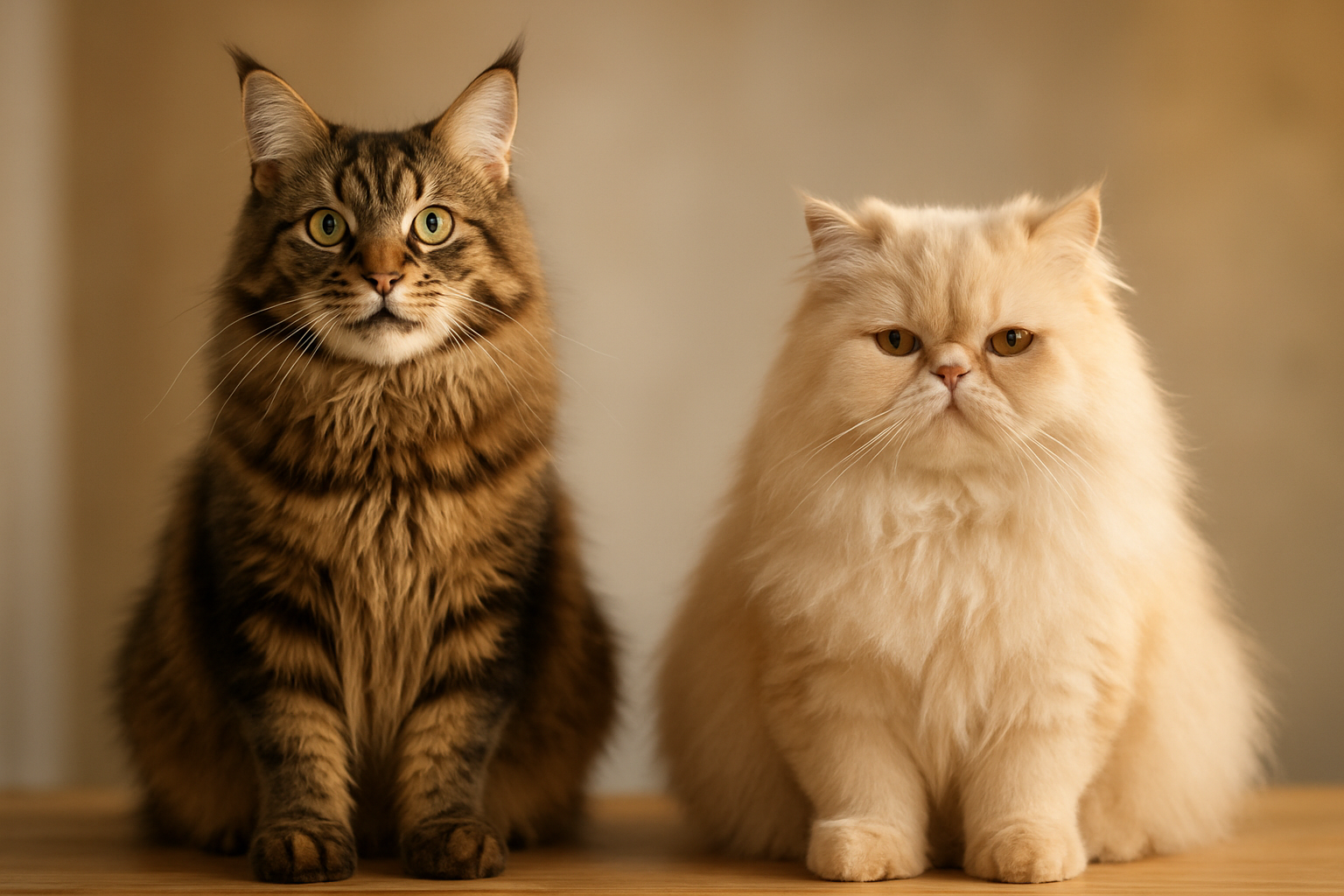
Maine Coons are natural athletes with moderate to high energy levels that reflect their working cat heritage. These gentle giants love climbing, jumping, and exploring every corner of your home. You’ll often find them perching on tall furniture or investigating new spaces with curiosity. Their energy comes in bursts – they’ll have active play sessions followed by long, peaceful naps.
Persian cats prefer a more sedentary lifestyle, perfectly content with low to moderate activity levels. They’re the couch potatoes of the cat world, choosing comfortable spots for extended lounging sessions. While they enjoy gentle play with feather toys or laser pointers, they won’t demand high-intensity activities like their Maine Coon counterparts.
| Breed | Energy Level | Preferred Activities |
|---|---|---|
| Maine Coon | Moderate-High | Climbing, exploring, interactive games |
| Persian | Low-Moderate | Gentle play, lounging, observation |
Social Behavior and Human Interaction Preferences
The 7 differences Maine Coon vs Persian temperament become crystal clear when observing their social behaviors. Maine Coons are incredibly people-oriented, often following family members from room to room like loyal shadows. They’re excellent with children and other pets, earning them the nickname “dog-like cats.” These social butterflies thrive on family interaction and rarely hide when guests arrive.
Persian cats display more selective social preferences. They bond deeply with their chosen humans but can be reserved around strangers. Persians appreciate quiet, calm interactions and prefer adults or older children who understand their gentle nature. They’re not antisocial – just more discerning about their social circle.
Independence vs Attention-Seeking Tendencies
Maine Coons strike a perfect balance between independence and affection. While they enjoy human company, they don’t become clingy or demanding. They’ll happily entertain themselves when you’re busy but eagerly join you during relaxation time. This makes them ideal for families with varying schedules.
Persian cats lean toward the attention-seeking side, though in a subtle, dignified manner. They expect regular petting sessions and prefer consistent routines. Persians can become stressed when left alone for extended periods, making them better suited for homes where someone is frequently present.
Playfulness and Entertainment Needs
Maine Coons maintain kitten-like playfulness well into adulthood. They love puzzle toys, interactive games, and anything that challenges their hunting instincts. Water play is a unique Maine Coon trait – many enjoy dipping paws in water bowls or playing with dripping faucets.
Persian cats prefer gentler entertainment options. They enjoy watching bird videos, playing with soft toys, and engaging in calm interactive sessions. Their flat faces make intense play sessions uncomfortable, so they favor activities that don’t require heavy breathing or extensive physical exertion.
Grooming Requirements That Impact Your Daily Routine
Brushing Frequency and Time Commitment
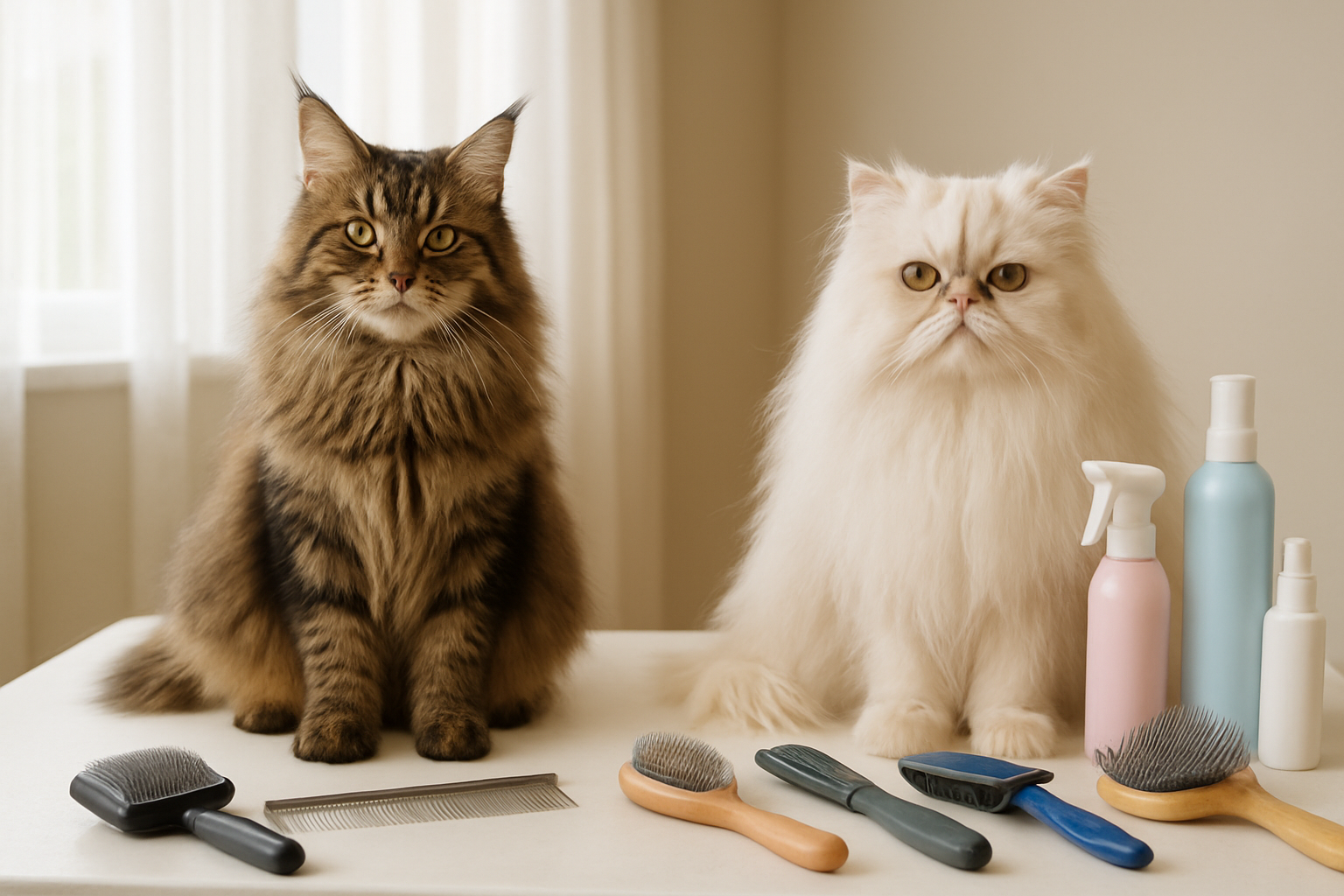
Maine Coon cats require daily brushing to keep their long, silky coats in top condition. Their triple-layered fur can quickly develop mats and tangles without consistent care, especially around the ruff, belly, and legs. Plan to spend 10-15 minutes each day working through their coat with a slicker brush and metal comb.
Persian cats demand even more intensive grooming due to their ultra-long, dense fur that tangles easily. Daily brushing is absolutely essential, often requiring 15-20 minutes of careful attention. Their facial structure makes grooming around the face particularly challenging, and their coat texture creates mats faster than most long-haired breeds.
| Breed | Daily Brushing Time | Weekly Deep Grooming | Mat Prevention |
|---|---|---|---|
| Maine Coon | 10-15 minutes | 30-45 minutes | Moderate difficulty |
| Persian | 15-20 minutes | 45-60 minutes | High difficulty |
Shedding Patterns and Household Management
Maine Coon vs Persian shedding shocking truth reveals significant differences in how these breeds affect your home. Maine Coons shed seasonally, with heavy shedding periods in spring and fall. Their guard hairs are longer but less numerous, making cleanup more manageable with regular vacuuming and lint rolling.
Persian cats shed consistently year-round, creating a constant cloud of fine undercoat throughout your home. Their dense double coat releases more hair volume daily than Maine Coons, requiring more frequent cleaning of furniture, clothing, and air filters. Expect to vacuum daily and invest in high-quality air purifiers.
Professional Grooming Needs and Costs
Maine Coons typically need professional grooming every 6-8 weeks, focusing on sanitary trims, nail clipping, and thorough brushing. Professional sessions cost $60-$80 and help maintain coat health while preventing severe matting.
Persian cats require professional grooming every 4-6 weeks due to their high-maintenance coats. Services often include face cleaning, eye area trimming, and full-body clipping in summer months. Expect to pay $80-$120 per session, with some owners opting for monthly visits to keep coats manageable. Emergency dematting services can cost an additional $50-$100 when home grooming falls behind.
Health Considerations That Affect Lifespan and Vet Bills
Breed-Specific Health Issues to Watch For
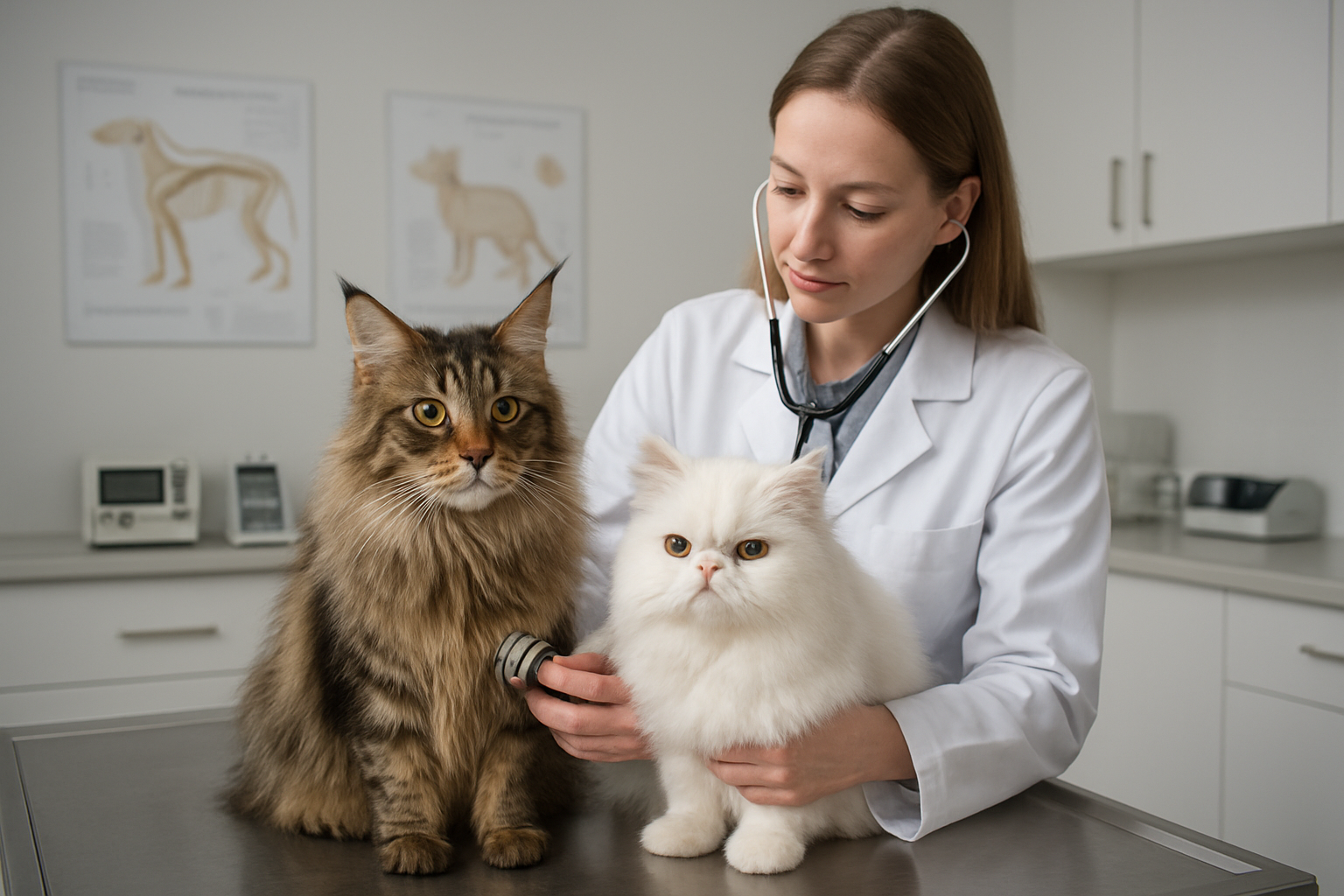
Maine Coons face several serious health challenges that potential owners need to understand. Hypertrophic cardiomyopathy (HCM) stands as their most concerning genetic condition, affecting the heart muscle and potentially causing sudden death. Hip dysplasia also troubles this large breed, creating mobility issues as they age. Spinal muscular atrophy, while less common, can severely impact their quality of life by affecting muscle function.
Persian cats deal with their own unique set of problems, primarily related to their distinctive flat face structure. Brachycephalic obstructive airway syndrome makes breathing difficult and can lead to serious respiratory complications. Their shortened tear ducts cause constant eye drainage and increase infection risks. Polycystic kidney disease represents another major concern for Persian owners, potentially requiring expensive long-term management.
Genetic Predispositions and Screening Requirements
Responsible breeders screen Maine Coons for HCM through echocardiograms and genetic testing. Hip scoring helps identify potential dysplasia issues early. DNA tests can detect the spinal muscular atrophy gene, allowing breeders to make informed breeding decisions.
Persian breeding programs focus heavily on kidney screening through ultrasounds and genetic testing for polycystic kidney disease. Eye examinations become crucial given their predisposition to various ocular conditions. Respiratory assessments help identify cats with severe breathing restrictions.
| Screening Test | Maine Coon | Persian |
|---|---|---|
| Heart Screening | Essential (HCM) | Recommended |
| Kidney Testing | Standard | Critical (PKD) |
| Eye Examinations | Routine | Essential |
| Hip Scoring | Important | Not required |
Average Lifespan and Aging Patterns
7 key Maine Coon Cat vs Persian lifespan facts reveal significant differences between these breeds. Maine Coons typically live 12-15 years, with many reaching their senior years while maintaining good mobility. Their larger size means they mature more slowly, often not reaching full size until age 4-5.
Persians generally have shorter lifespans of 10-13 years due to their breathing difficulties and genetic health issues. Their flat faces contribute to ongoing respiratory stress throughout their lives. Persian cats often show aging signs earlier, particularly around breathing capacity and kidney function.
Preventive Care Differences
Maine Coons require regular cardiac monitoring throughout their lives, with annual heart screenings becoming more frequent after age 5. Their active nature means joint supplements and weight management become important as they age. Regular dental care prevents issues common in larger cats.
Persians need daily eye cleaning to prevent infections and constant monitoring of their breathing patterns. Their grooming needs extend beyond aesthetics – matted fur can worsen breathing problems. Climate control becomes essential since they overheat easily due to their compromised airways.
Regular veterinary costs differ significantly between breeds, with Persians often requiring more frequent visits for respiratory and eye issues, while Maine Coons may face expensive cardiac treatments later in life.
Living Environment Needs That Determine Compatibility
Space Requirements for Optimal Happiness
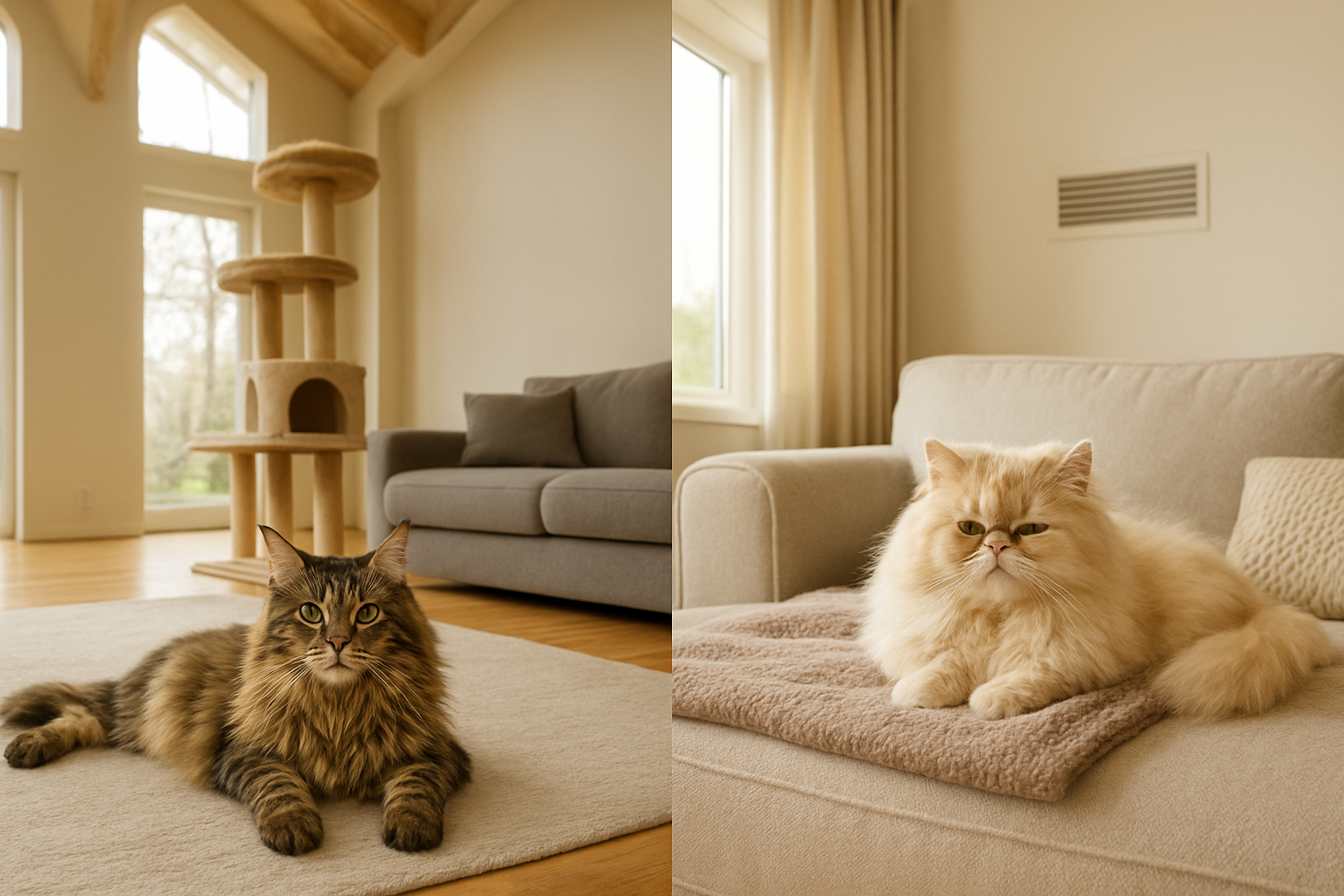
Maine Coons are absolute giants that need serious space to thrive. These cats can reach up to 40 inches in length and weigh 25 pounds, making small apartments feel cramped. They love to climb, explore vertical spaces, and need room to stretch their impressive frames. Persian cats, while smaller and more compact, actually do better in cozy environments where they can claim their favorite spots.
Maine Coon vs Persian apartment living shows a clear winner – Persians adapt beautifully to smaller homes. They’re content lounging on windowsills or finding a comfortable corner to survey their kingdom. Maine Coons, however, will appreciate every square foot you can give them, especially high perches and cat trees.
| Breed | Minimum Space | Ideal Living Space |
|---|---|---|
| Maine Coon | 800+ sq ft | House with multiple rooms |
| Persian | 400+ sq ft | Apartment or small home |
Climate Preferences and Temperature Sensitivity
Maine Coons come equipped with nature’s perfect winter coat. Their thick, water-resistant fur and tufted ears evolved for harsh Maine winters. They actually prefer cooler temperatures and can overheat in hot climates without proper air conditioning. These cats love chilly mornings and will seek out the coolest spots in your home during summer.
Persians face the opposite challenge. Their flat faces create breathing difficulties in extreme temperatures, both hot and cold. They’re incredibly sensitive to heat and can develop serious respiratory issues. Their long, dense coat also traps heat, making them miserable in warm weather. Both breeds need climate-controlled environments, but for different reasons.
Indoor vs Outdoor Living Adaptability
Maine Coons have strong outdoor instincts and hunting drives. While they can live happily indoors, they absolutely thrive with supervised outdoor access like enclosed patios or harness walks. Their adventurous spirit and athletic build make them natural explorers who benefit from environmental enrichment.
Persians are homebodies through and through. Their flat faces make them vulnerable to respiratory issues outdoors, and their gorgeous coats pick up every piece of debris. They’re perfectly content as indoor cats and actually prefer the safety and comfort of home. Which cat breed Maine Coon or Persian for families often depends on your outdoor access and lifestyle.
Family Structure and Children Compatibility
Maine Coons are legendary family cats. Their gentle giant personalities make them incredible with children of all ages. They’re patient, playful, and protective without being aggressive. These cats often become the family dog’s best friend and handle household chaos with remarkable grace.
Persians prefer calmer households. While they can love children, they do better with older kids who understand gentle handling. Their quiet, dignified nature suits families who appreciate a more serene companion. Both breeds form strong family bonds, but Maine Coons are definitely more tolerant of the unpredictable energy that comes with busy family life.
Training and Intelligence Levels That Shape Your Experience
Trainability and Learning Capacity Differences
Maine Coons absolutely shine when it comes to learning new tricks and commands. These gentle giants pick up behaviors quickly and retain them well, making them one of the most trainable cat breeds. You can teach them to fetch, walk on a leash, or even open doors with their impressive paws. Their dog-like nature means they actually enjoy training sessions and respond well to positive reinforcement.
Persian cats approach learning differently. While they’re perfectly intelligent, they’re more selective about what they choose to learn. These regal cats prefer routines and can be stubborn when introduced to new concepts. Training a Persian requires more patience and shorter sessions since they lose interest faster than Maine Coons.
| Training Aspect | Maine Coon | Persian |
|---|---|---|
| Learning Speed | Fast | Moderate |
| Attention Span | 10-15 minutes | 5-8 minutes |
| Command Response | Excellent | Good with patience |
| Trick Learning | High capacity | Limited interest |
Problem-Solving Skills and Mental Stimulation Needs
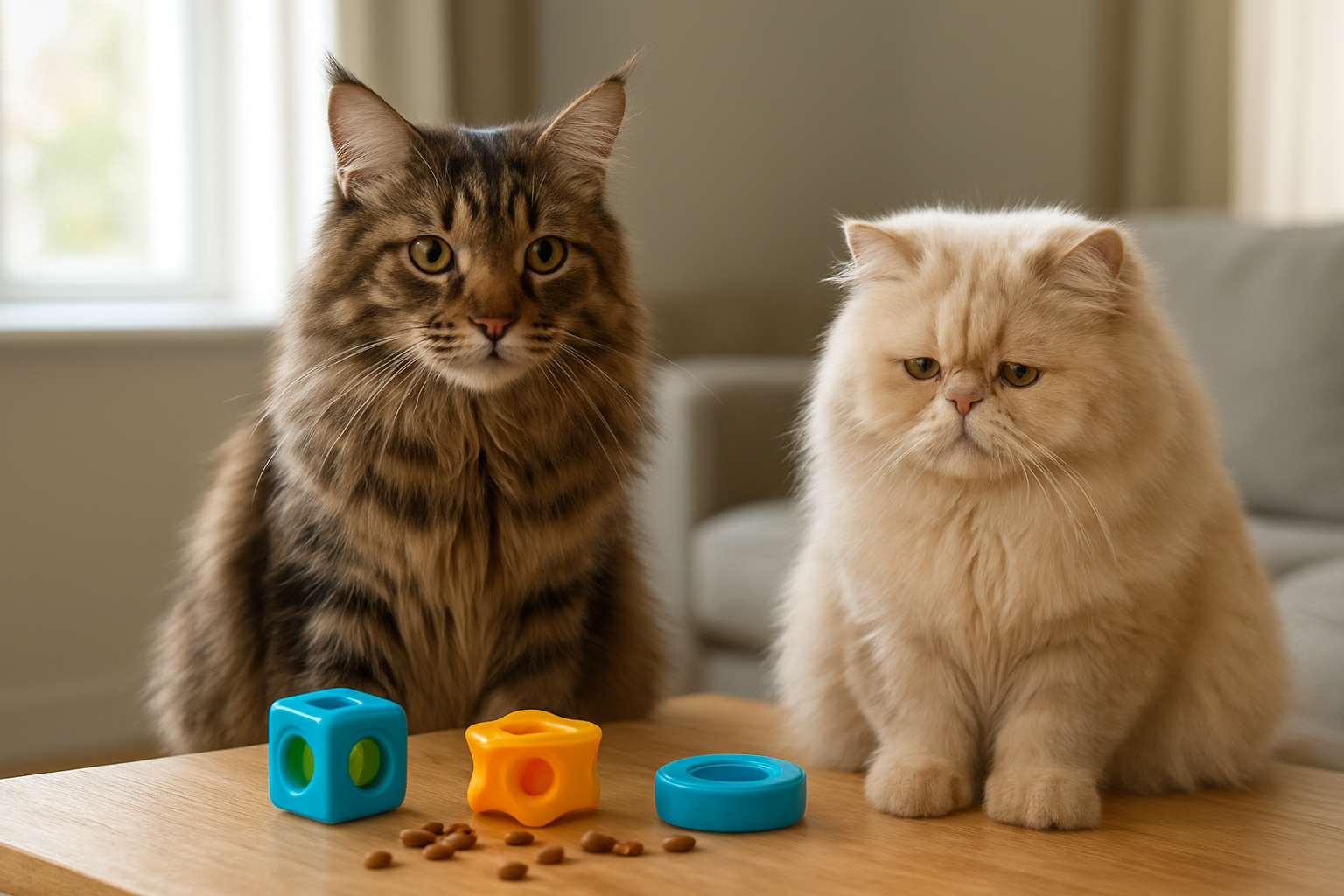
Maine Coons are natural problem solvers who love interactive puzzles and challenging toys. They’ll figure out how to open cabinets, manipulate treat dispensers, and navigate complex cat trees with ease. These cats need substantial mental stimulation to prevent boredom, so puzzle feeders and rotating toys work perfectly.
Persians prefer simpler mental challenges. They enjoy gentle play but don’t seek out complex problems to solve. A feather wand or laser pointer provides enough mental engagement for most Persians. Their laid-back personality means they’re content with less stimulation than their Maine Coon counterparts.
Communication Styles and Vocalization Patterns
Maine Coons are famous for their unique “chirping” and “trilling” sounds rather than traditional meowing. They’re quite vocal and will carry on conversations with their owners, often responding to questions with adorable chirps. Many owners report their Maine Coons greet them at the door with a series of welcoming sounds.
Persian cats communicate more softly and sparingly. They rarely vocalize unless they need something specific, preferring subtle body language and gentle purring to express themselves. When Persians do meow, it’s typically sweet and quiet, matching their refined demeanor perfectly.
Cost Factors That Impact Your Budget Long-Term
Initial Purchase Price and Breeder Considerations
Maine Coon vs Persian cost differences revealed when you start shopping for your new feline companion. Maine Coons typically cost between $1,000-$2,500 from reputable breeders, while Persians command higher prices ranging from $1,500-$3,000. Show-quality cats from champion bloodlines can push these prices even higher, with premium Persians reaching $5,000 or more.
The price difference reflects breeding complexity and demand. Persian cats require more specialized breeding knowledge due to their flat facial structure, which can complicate births and requires careful genetic selection. Maine Coons, while still requiring skilled breeding, generally have fewer structural complications.
| Breed | Pet Quality | Show Quality | Champion Lines |
|---|---|---|---|
| Maine Coon | $1,000-$1,800 | $1,800-$2,500 | $2,500-$4,000 |
| Persian | $1,500-$2,200 | $2,200-$3,500 | $3,500-$5,000+ |
Adoption from shelters offers a budget-friendly alternative, with Maine Coon mixes available for $50-$300 and Persian mixes for similar fees. However, purebred examples are rare in rescue situations.
Monthly Food and Supply Expenses
Maine Coons eat significantly more than Persians due to their larger size. Adult Maine Coons weigh 12-25 pounds compared to Persians at 7-12 pounds. This size difference translates to monthly food costs of $30-$50 for Maine Coons versus $20-$35 for Persians when feeding high-quality dry and wet food.
Litter box expenses also vary. Maine Coons need larger, sturdier boxes and use more litter due to their size. Budget $15-$25 monthly for Maine Coon litter versus $10-$18 for Persians. Maine Coons also require larger scratching posts, beds, and carriers, increasing initial setup costs by $100-$200.
Veterinary Care and Insurance Costs
Shocking Maine Coon Cat vs Persian health facts reveal different long-term medical expenses. Persians face higher veterinary costs due to breed-specific health issues like breathing problems, eye conditions, and kidney disease. Annual vet bills for Persians average $800-$1,200, while Maine Coons typically cost $600-$900 annually.
Pet insurance premiums reflect these risks. Persian cat insurance costs $25-$45 monthly, while Maine Coon coverage runs $20-$35 monthly. Persians often require specialized treatments for brachycephalic airway syndrome, tear duct issues, and polycystic kidney disease, which insurance may not fully cover.
Emergency costs hit harder with Persians. Breathing crisis interventions can cost $2,000-$5,000, while Maine Coon emergencies typically involve orthopedic issues costing $1,500-$3,000.
Grooming and Maintenance Investment
Maine Coon vs Persian grooming differences create vastly different maintenance budgets. Persians require daily brushing and professional grooming every 4-6 weeks, costing $60-$100 per session. Annual professional grooming for Persians runs $600-$1,200.
Maine Coons need less frequent professional grooming every 8-12 weeks at $50-$80 per session, totaling $300-$500 annually. However, both breeds benefit from quality brushes and dematting tools costing $50-$100 initially.
Persian owners often invest in additional eye-cleaning supplies, special shampoos for their coat type, and sometimes require sedated grooming for matted cats, adding $200-$400 yearly. Maine Coons typically need basic grooming supplies and occasional nail trims, keeping maintenance costs lower overall.
FAQ
Which breed is better for first-time cat owners?
Maine Coons win hands down for beginners. Their laid-back temperament and minimal grooming needs make them incredibly forgiving. While Persian cats require daily brushing and careful attention to their breathing, Maine Coons adapt easily to your lifestyle and forgive occasional grooming lapses without developing serious health issues.
Do Maine Coons or Persians shed more?
Maine Coon Cat vs Persian Cat shedding shocking truth: Maine Coons actually shed less despite their larger size. Their double coat releases fur seasonally, while Persians shed continuously year-round. Persian fur also mats more easily, creating bigger cleanup challenges. Maine Coon fur is coarser and doesn’t stick to furniture as stubbornly as Persian’s fine, silky hair.
Which breed lives longer on average?
7 key Maine Coon Cat vs Persian lifespan facts show Maine Coons typically live 12-15 years, while Persians average 10-17 years. However, Maine Coons face fewer breathing-related health issues that can shorten Persian lifespans. Proper care extends both breeds’ lives, but Maine Coons generally experience fewer genetic health complications throughout their lifetime.
Are these breeds good with children and other pets?
7 differences Maine Coon vs Persian temperament reveal Maine Coons excel with families. They’re patient, playful, and protective without being aggressive. Persians prefer quieter households and may stress around energetic children. Both breeds socialize well with other cats, but Maine Coons adapt faster to multi-pet households and handle chaos better than sensitive Persians.
Which cat breed Maine Coon or Persian for families with limited space?
Decide Maine Coon vs Persian apartment living depends on your setup. Persians adapt better to small spaces since they’re less active and don’t need climbing structures. Maine Coons need vertical space and interactive play areas. However, Maine Coons are quieter and less demanding, making them surprisingly good apartment companions despite their size.
How much do grooming costs differ between breeds?
Maine Coon Cat vs Persian Cat grooming differences create significant budget gaps. Professional Persian grooming costs $80-120 monthly due to daily brushing needs and specialized cuts. Maine Coons need professional grooming every 6-8 weeks at $60-80 per session. Over a lifetime, Persian grooming costs roughly double Maine Coon expenses, not including emergency mat removal services.
Which breed requires more expensive healthcare?
Maine Coon Cat vs Persian Cat cost differences revealed show Persians need more specialized veterinary care. Their flat faces create breathing issues requiring expensive treatments and surgery. Maine Coons face hip dysplasia and heart conditions, but these develop later and cost less to manage. Annual Persian vet bills average $800-1500 versus $400-800 for Maine Coons. Maine Coon Cat vs Persian Cat
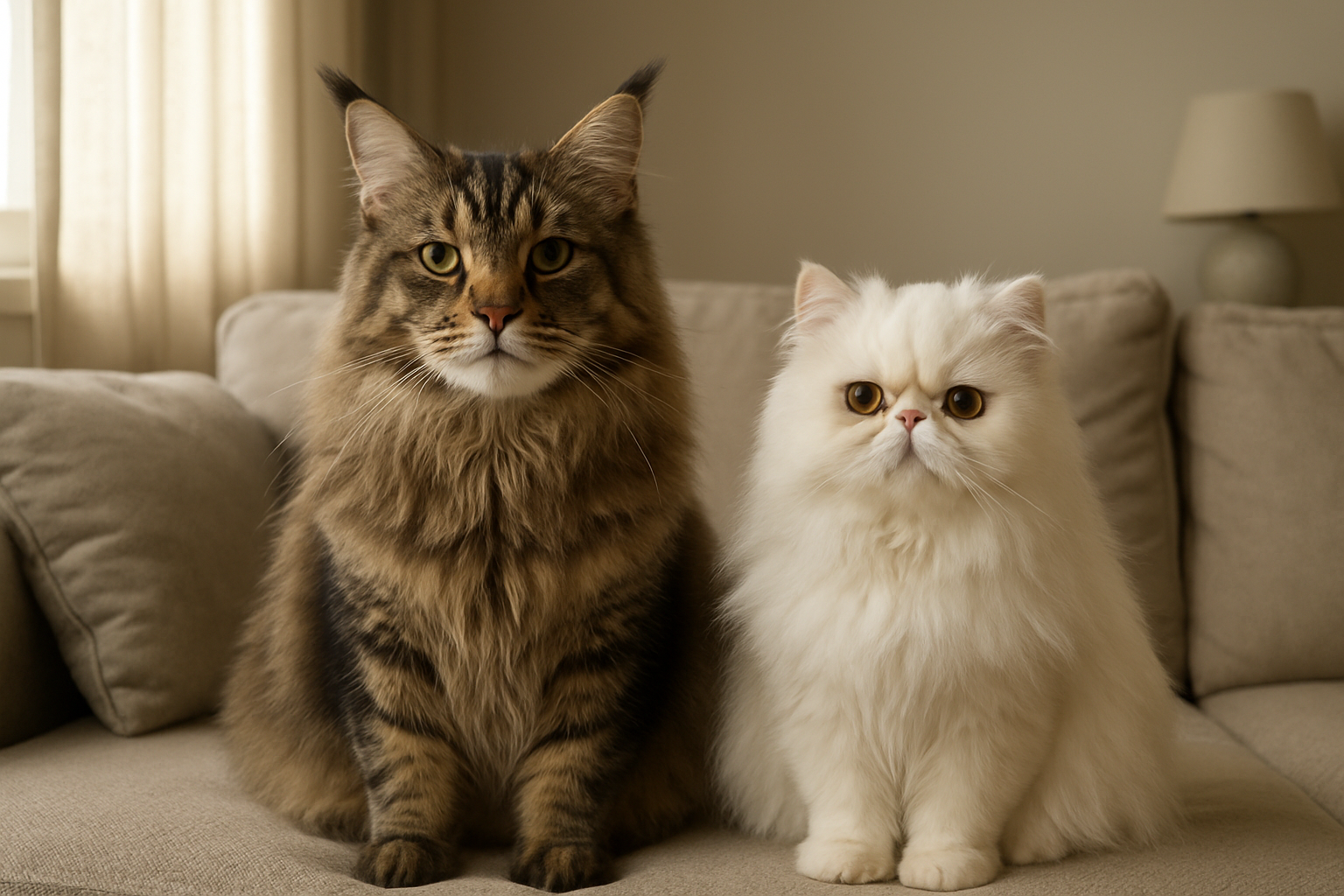
Maine Coons and Persian cats each bring something special to the table, but they’re worlds apart in almost every way that matters. From the Maine Coon’s rugged outdoor spirit and easy-going grooming needs to the Persian’s gentle lap cat nature and high-maintenance coat, your choice really comes down to your lifestyle and what you’re ready to handle. Think about your living space, how much time you can dedicate to grooming, and whether you want a playful companion or a calm cuddle buddy. Maine Coon Cat vs Persian Cat
The bottom line is simple: there’s no wrong choice here, just different paths to cat parenthood. If you’re ready for daily brushing sessions and prefer a quieter, more relaxed feline friend, a Persian might be your perfect match. But if you want a larger, more independent cat that can handle your busy schedule while still being social and fun, the Maine Coon could be calling your name. Take an honest look at your budget, time, and living situation – your future feline friend is counting on you to make the choice that works for both of you. Maine Coon Cat vs Persian Cat